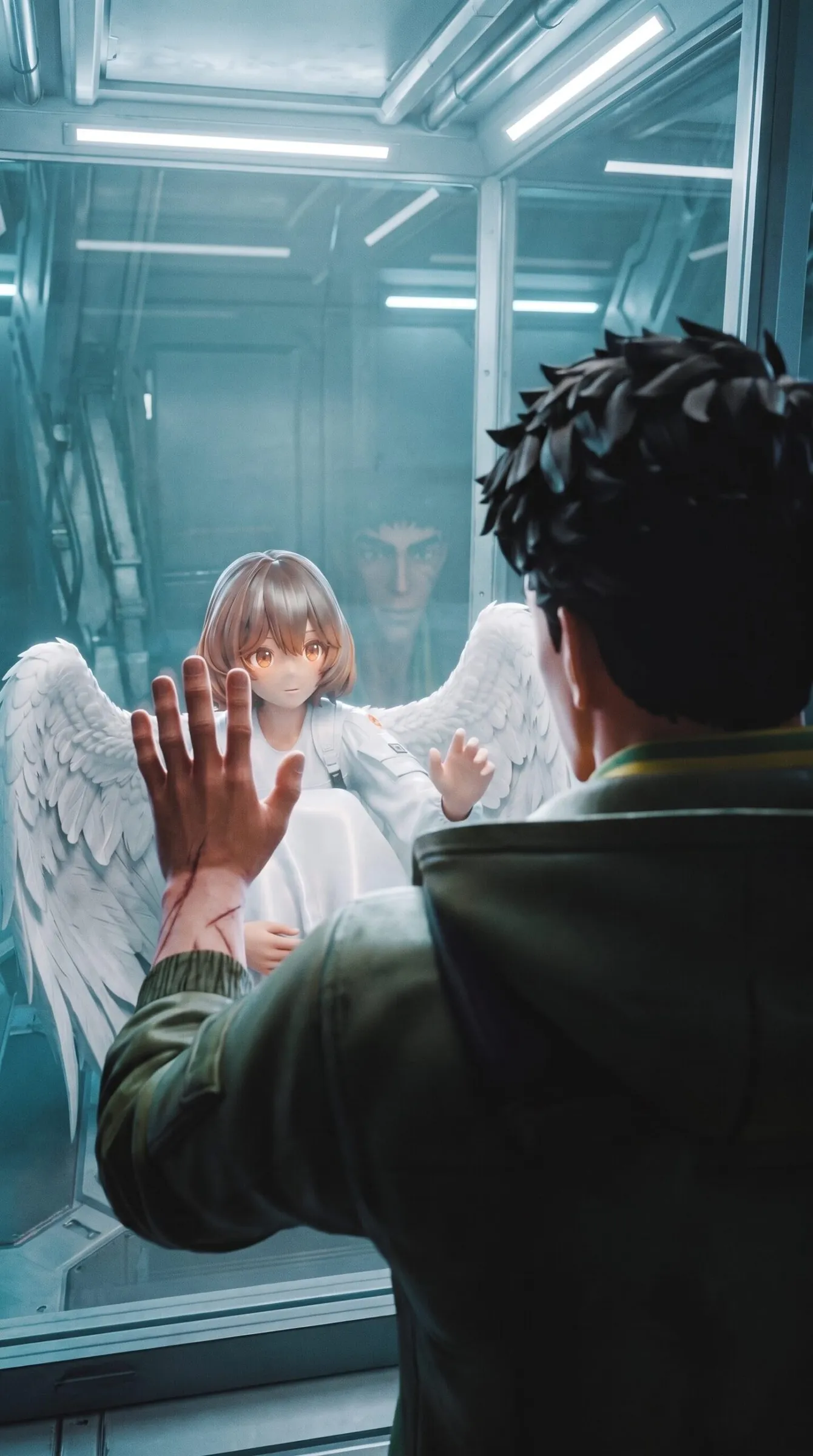
 New
New미야자키 하야오 감독의〈On Your Mark〉를 AI로 다시 만들었습니다 — 제작 과정과 프롬프트 전부 공개
시네마틱 단편Higgsfield · 시댄스 2.5
Prompt18,148자
35 seconds, 16:9, a single uninterrupted long take, an ultra-photorealistic live-action urban parkour pursuit film. The core is an aggressive chase after a man who is desperately trying to escape from us. The high-speed urban parkour, densely packed residential environment, and vertical spatial design should feel raw, kinetic, and entirely original. It must be absolutely clear that the man ahead is not our friend, partner, or guide. He is the target being pursued. He is afraid of being caught and actively tries to escape from us at all times. He repeatedly looks back in panic, visibly accelerates whenever he sees us closing in, and shows clear tension, exhaustion, and fear on his face. He deliberately changes direction, locks doors, slams doors, pushes over furniture, closes metal security gates, kicks obstacles into our path, pulls ladders away, and tries to lose us during rope descents. The target must never cooperate with the camera, wait for us, maintain a convenient fixed distance, or behave as though he is guiding us through the route. He constantly tries to break our line of sight and uses his superior knowledge of the residential complex to escape. At times the camera nearly catches him; at other times, a door or obstacle briefly increases the distance before we take a shorter route and catch up again. The entire video contains no cuts, montage, slow motion, time jumps, hidden transitions, teleportation, or digital zooms. Every space is physically connected through doorways, windows, balconies, staircases, corridors, ropes, and rooftops. The camera always represents the pursuer’s first-person perspective. Our hands, forearms, shoulders, and legs repeatedly enter the frame while opening doors, climbing, blocking attacks, jumping, and landing. The chase occupies more than 85% of the total runtime. Only three people genuinely help the target by trying to obstruct us, and each physical encounter lasts less than one second. Everyone else inside the residences is an ordinary resident who does not participate in the fight. They react to the target and camera suddenly bursting in with realistic, slightly delayed fear: stepping backward, holding their children, moving out of the path, raising their hands to protect themselves, shouting, or pressing themselves against the wall. Nobody may know the pursuit route in advance. Continuous Spatial Route Residential courtyard → apartment-building entrance → stairwell → first apartment’s living room and kitchen → bedroom → exterior balcony → second apartment’s dining room and narrow corridor → bathroom window → rope descent through the central courtyard → third apartment’s living room → laundry room and kitchen → exterior fire escape → rooftop → rooftop skylight → fourth penthouse apartment → connected balconies → second rope descent → storefront awning → final rooftop pursuit and capture. The target is a lean man in his twenties wearing a dark-gray hooded track jacket, black cargo pants, and red running shoes with white soles. A black rappelling rope and metal carabiners hang from his waist. He remains the same person throughout, with completely consistent facial features, hairstyle, clothing, sweat, and physical condition. The first frame is already in the middle of a full-speed chase. The target is less than three meters from the camera, sprinting desperately through the courtyard of an aging residential complex. He suddenly looks back and briefly makes eye contact with the camera. When he sees how close we are, obvious panic appears on his face. He crashes into a pedestrian, steps onto a bench, and vaults over a bicycle rack. He is not performing elegant parkour; he is genuinely running for his life. He lands slightly off balance and strikes his shoulder against a wall but immediately continues running. After looking back to confirm the distance, he deliberately kicks over a bicycle, sending it sideways across our path. We do not follow his exact route. Instead, we step onto the edge of a planter and leap over the fallen bicycle. One palm briefly touches the ground on landing, causing the camera to drop violently before immediately surging toward the target again. The target bursts through the residential entrance and violently swings the glass door backward at us. The door nearly strikes the lens. At the last possible moment, our hand blocks it, creating an enormous close-up of the glass, our palm, and the target’s terrified face. When he realizes the door has failed to stop us, he immediately turns and sprints toward the stairs. He pulls down a metal security gate to seal the entrance. We crouch and slide beneath it just before it reaches the floor. The first blocker reaches from the side and tries to grab our shoulder. We deflect his hand with our forearm and use our forward momentum to drive him into the wall, continuing the pursuit without stopping to fight. The target takes three steps at a time and grabs the handrail to swing around the landing. He repeatedly looks back while breathing erratically. When he sees us closing the distance, he does not continue upstairs. Instead, he suddenly crashes through the door of an apartment on the second-floor landing, attempting to lose us inside an unfamiliar residence. The camera follows closely into the first apartment. An ordinary family is eating inside. The target suddenly bursts into the living room. The residents freeze for half a second before recoiling in fear. The target knocks over a chair and forces his way through the narrow passage between the dining table and sofa. He grabs a lightweight dining table and deliberately shoves it backward into our path. We brace one hand against the tabletop and swing both legs sideways over it. Cups, dishes, and papers are thrown into the air. The residents quickly retreat against the wall and clear the route. The target runs through the kitchen, kicks a serving cart loaded with dishes into the doorway, and slams the kitchen door shut. The door closes violently directly in front of the lens. We ram it open with our shoulder. The door rebounds, the cart overturns, and metal utensils slide across the floor. The target has already entered the bedroom. He deliberately locks the bedroom door and pushes a low cabinet against it. The camera hears furniture scraping and the target’s rapid breathing. We do not stop. We kick the lock open, forcing the door against the cabinet and creating a gap large enough to pass through. Our hand grabs the doorframe as we turn sideways and squeeze inside. The target is climbing through the bedroom window onto the exterior balcony. He looks back, sees that we have already entered the room, and becomes visibly more terrified. He grabs a pillow and throws it toward the camera. The pillow briefly covers part of the frame but must not create a hidden transition. We sweep it aside and jump through the window directly behind him. The target runs along the narrow balcony and pushes a drying rack backward. Clothes and metal poles fall across the route. We slide beneath the rack in a low posture as wet clothing brushes across the lens. The target kicks open the neighboring apartment’s balcony door and bursts into the second residence. Two residents in the second apartment are watching television. The target runs between the television and coffee table, steps onto the back of the sofa, and jumps into the dining room. He does not politely avoid anyone. In his desperation, he knocks over a floor lamp and pulls a sliding door across the route to block us. We turn sideways and squeeze through the narrowing gap in the sliding door, striking our shoulder against the frame. The target looks back, realizes that he has still failed to lose us, grabs a dining chair, and shoves it into the corridor. We step onto the moving seat and use its momentum to vault over the chair’s back. The second blocker rushes out of a side door in the corridor and tries to wrap his arms around us. We lower our head, pass beneath his arms, and strike his body aside with our shoulder without slowing down. The target suddenly dives into a narrow bathroom, locks the door, and opens a small window at the far end. He steps onto the washing machine and squeezes through the window onto the exterior wall of the central courtyard. By the time we break through the bathroom door, he has already clipped his rope to a fixed anchor ring on the exterior wall. He rapidly descends the rope from the fourth floor toward the second. Before descending, he looks back in panic once more. When he sees our hands already gripping the window frame, he immediately accelerates. He kicks both feet violently against the wall, making the rope swing widely to increase the difficulty of our pursuit. We jump through the bathroom window and descend on the same rope. The camera drops vertically beside the exterior wall as windows, balconies, pipes, hanging laundry, and air-conditioning units rush upward through the frame. The rope becomes realistically taut. Our hands and straining forearms dominate the extreme foreground. When the target reaches the third floor, he deliberately swings toward a balcony, suddenly releases the rope, and jumps into the third apartment. He tries to pull the rope away from its anchor point, but does not have enough time and is forced to keep running. We kick away from the wall using the still-swinging rope and swing directly through the same balcony door. Inside the third apartment’s living room, a resident has just risen from the sofa. The target runs past him and throws sofa cushions and a blanket backward. We block the soft objects with our arms and move around the resident without colliding with him. The target runs through a narrow laundry room, knocks over a laundry basket, and pushes the laundry-room door shut behind him. We stop the door with one foot and force our body through the gap. The target is now less than one meter ahead. He looks back and sees our hand almost touching his jacket, then abruptly changes direction and jumps onto the kitchen counter. He runs along the countertop and over the sink, kicks over a lightweight plastic rack, and jumps through another window onto the exterior fire escape. We brace one hand against the counter, pass through the narrow space between the sink and overhead cabinets, and jump through the window directly behind him. The target climbs upward along the fire escape. He deliberately kicks the lower ladder section outward, trying to swing it away from us. The metal ladder moves violently. We push away from the wall, catch the side rail of the swinging ladder, and pull our body upward with both arms. The third and final blocker grabs our wrist from the upper platform. Our other hand remains locked around the railing as we plant a foot against the wall and swing our body outward, pulling our wrist free from his grip. We use the swinging momentum to clear the platform and continue upward. The entire physical contact lasts less than one second. The target climbs onto the first rooftop. When he sees that we are still behind him, his face shows obvious despair. He can no longer maintain a clean rhythm. He desperately accelerates, breathing rapidly as his running form becomes progressively heavier. What follows is a pure parkour pursuit without any additional blockers. The target continuously clears ventilation ducts, water tanks, clotheslines, and low rooftop walls. He jumps over the first gap between buildings. His shoe slips on landing, and one palm scrapes across the metal roof, but he immediately recovers and keeps running. We repeatedly choose shorter routes: sliding beneath a water tank, stepping onto an air-conditioning unit to change direction, vaulting a low wall with one hand, and clearing the same rooftop gap immediately after the target lands. The distance between us decreases from six meters to three meters. When the target realizes we are about to catch him, he suddenly crashes through a rooftop skylight and jumps into the fourth penthouse apartment. The glass must not shatter dangerously; the skylight is already open or constructed from lightweight transparent plastic. The camera follows directly behind him, dropping into an attic bedroom. The target crashes past the bed, knocks over a clothing rack, and slams the bedroom door shut. He runs down the stairs into the lower living room and passes between two terrified residents. He grabs the edge of a bookcase and tries to pull it over to block the route, but it is too heavy and only a few books fall from it. We crash through the bedroom door and slide down the outside of the staircase railing. The target sprints through the living room and kicks a small side table beside the sofa into our path. We step onto the tabletop, vault over the sofa, and nearly grab his hooded jacket, but he suddenly ducks and pulls free. The target jumps from the living-room balcony onto the connected exterior balconies of the neighboring residences. He crosses the balcony spaces of two homes, vaulting railings, drying racks, and air-conditioning units. Whenever he enters a new room or balcony, the residents react with genuine surprise and fear. Nobody clears a perfect path in advance. The target reaches the final balcony and clips a second rope to the railing. He tries to descend from the fifth floor onto a storefront awning. Before descending, he kicks at our hand, explicitly attempting to stop the pursuit. We block the sole of his shoe with our forearm, grab the rope, and follow him downward. At the fourth-floor level, the target suddenly swings sideways and tries to force open a kitchen window to reenter the building. The window jams, costing him one second, and he is forced to continue descending. We use his mistake to reduce the distance. The target lands on the metal storefront awning, which bends and rebounds under the impact. He immediately jumps onto an exhaust unit, grabs the edge of a lower rooftop, and climbs upward. We release the rope for the final two meters and drop onto the awning. The camera strikes the surface heavily. Both hands briefly brace against it before we follow the target’s route back onto the rooftop. The final section does not enter any more rooms and contains no additional people. The target is now exhausted and terrified. He looks back three times, and each time he discovers that we are closer. He runs toward the rooftop edge and tries to attach his rope to the final railing so he can continue descending. His hands are slick with sweat and weakened by exhaustion, preventing him from securing the carabiner on the first attempt. The metal clip slips off the railing. The target panics and tries again. We step onto a ventilation unit and launch forward at full force, grabbing the back of his jacket and his right wrist. The target desperately lunges forward and tries to climb over the railing, but we pull him back onto the rooftop. Both bodies fall under their combined high-speed momentum and slide across the rough concrete. The target struggles, swings an elbow, and tries to crawl toward the fallen rope. We block his arm, roll him over, pin his shoulder, control his hips with one knee, and secure both hands behind his back. The final image must clearly show that the capture has been completed. The target is fully restrained face-down. His red running shoes make one final struggling movement and then stop. Our hands remain firmly locked around his wrists. The target no longer runs and cannot suddenly escape. The camera shakes violently from exhaustion and heavy breathing. In the background, the continuous residential buildings, open apartment windows, moving curtains, fire escape, rooftop skylight, and rope still swinging against the exterior wall are all visible, proving that the entire pursuit followed one real, continuous route. Cinematography ARRI Alexa 35 cinematic image quality with an 84-degree classic wide-angle rectilinear field of view. The camera normally remains between 0.5 and 5 meters from the target. Extremely aggressive handheld cinematography: full-speed running, shoulders crashing into doors, sudden directional changes, sliding, climbing, rope descents, landing impacts, violent tilts, and rough recoveries back to level. The movement must not feel like a gimbal, a drone, or a video-game camera. The movement between the target and us must never resemble a rehearsed two-person parkour routine. The target constantly and actively sabotages the route, changes direction, creates obstacles, and closes passages. We must react spontaneously, break through obstacles, find tighter lines, and gradually reduce the distance. All parkour, rope descents, and collisions obey realistic physics. Every jump has a clear takeoff point and landing point. Every rope has a credible anchor point. Bodies have weight, gravity, inertia, friction, pain, sweat, and gradually accumulating exhaustion. No superpowers, flying, teleportation, passing through walls, or impossible changes between floors. Sound All sound is perfectly synchronized: the target’s panicked breathing, our heavier breathing, rapid footsteps, residents shouting, doors slamming, locks striking, furniture scraping, dishes falling, window frames, curtains, rope friction, metal carabiners, the fire escape, the awning bending, rooftop footsteps, air-conditioning noise, and distant city traffic. The music is a raw industrial breakbeat that continually accelerates. Add a short low-frequency impact whenever the target slams a door or abruptly changes direction. The music stops instantly when we finally capture him, leaving only both men’s breathing, clothing friction, the swinging rope, and distant city ambience. No narration, subtitles, watermarks, branding, game HUD, firearms, graphic close-ups of blood, or slow motion. The final result must feel like an exceptionally difficult single-take pursuit performed by a real camera crew and professional stunt performers: the target is clearly afraid of us and actively trying to escape; we force our way through multiple occupied apartments in pursuit and finally capture him on the rooftop.
Added 2026.08.24
Prompt
35 seconds, 16:9, a single uninterrupted long take, an ultra-photorealistic live-action urban parkour pursuit film. The core is an aggressive chase after a man who is desperately trying to escape from us. The high-speed urban parkour, densely packed residential environment, and vertical spatial design should feel raw, kinetic, and entirely original. It must be absolutely clear that the man ahead is not our friend, partner, or guide. He is the target being pursued. He is afraid of being caught and actively tries to escape from us at all times. He repeatedly looks back in panic, visibly accelerates whenever he sees us closing in, and shows clear tension, exhaustion, and fear on his face. He deliberately changes direction, locks doors, slams doors, pushes over furniture, closes metal security gates, kicks obstacles into our path, pulls ladders away, and tries to lose us during rope descents. The target must never cooperate with the camera, wait for us, maintain a convenient fixed distance, or behave as though he is guiding us through the route. He constantly tries to break our line of sight and uses his superior knowledge of the residential complex to escape. At times the camera nearly catches him; at other times, a door or obstacle briefly increases the distance before we take a shorter route and catch up again. The entire video contains no cuts, montage, slow motion, time jumps, hidden transitions, teleportation, or digital zooms. Every space is physically connected through doorways, windows, balconies, staircases, corridors, ropes, and rooftops. The camera always represents the pursuer’s first-person perspective. Our hands, forearms, shoulders, and legs repeatedly enter the frame while opening doors, climbing, blocking attacks, jumping, and landing. The chase occupies more than 85% of the total runtime. Only three people genuinely help the target by trying to obstruct us, and each physical encounter lasts less than one second. Everyone else inside the residences is an ordinary resident who does not participate in the fight. They react to the target and camera suddenly bursting in with realistic, slightly delayed fear: stepping backward, holding their children, moving out of the path, raising their hands to protect themselves, shouting, or pressing themselves against the wall. Nobody may know the pursuit route in advance. Continuous Spatial Route Residential courtyard → apartment-building entrance → stairwell → first apartment’s living room and kitchen → bedroom → exterior balcony → second apartment’s dining room and narrow corridor → bathroom window → rope descent through the central courtyard → third apartment’s living room → laundry room and kitchen → exterior fire escape → rooftop → rooftop skylight → fourth penthouse apartment → connected balconies → second rope descent → storefront awning → final rooftop pursuit and capture. The target is a lean man in his twenties wearing a dark-gray hooded track jacket, black cargo pants, and red running shoes with white soles. A black rappelling rope and metal carabiners hang from his waist. He remains the same person throughout, with completely consistent facial features, hairstyle, clothing, sweat, and physical condition. The first frame is already in the middle of a full-speed chase. The target is less than three meters from the camera, sprinting desperately through the courtyard of an aging residential complex. He suddenly looks back and briefly makes eye contact with the camera. When he sees how close we are, obvious panic appears on his face. He crashes into a pedestrian, steps onto a bench, and vaults over a bicycle rack. He is not performing elegant parkour; he is genuinely running for his life. He lands slightly off balance and strikes his shoulder against a wall but immediately continues running. After looking back to confirm the distance, he deliberately kicks over a bicycle, sending it sideways across our path. We do not follow his exact route. Instead, we step onto the edge of a planter and leap over the fallen bicycle. One palm briefly touches the ground on landing, causing the camera to drop violently before immediately surging toward the target again. The target bursts through the residential entrance and violently swings the glass door backward at us. The door nearly strikes the lens. At the last possible moment, our hand blocks it, creating an enormous close-up of the glass, our palm, and the target’s terrified face. When he realizes the door has failed to stop us, he immediately turns and sprints toward the stairs. He pulls down a metal security gate to seal the entrance. We crouch and slide beneath it just before it reaches the floor. The first blocker reaches from the side and tries to grab our shoulder. We deflect his hand with our forearm and use our forward momentum to drive him into the wall, continuing the pursuit without stopping to fight. The target takes three steps at a time and grabs the handrail to swing around the landing. He repeatedly looks back while breathing erratically. When he sees us closing the distance, he does not continue upstairs. Instead, he suddenly crashes through the door of an apartment on the second-floor landing, attempting to lose us inside an unfamiliar residence. The camera follows closely into the first apartment. An ordinary family is eating inside. The target suddenly bursts into the living room. The residents freeze for half a second before recoiling in fear. The target knocks over a chair and forces his way through the narrow passage between the dining table and sofa. He grabs a lightweight dining table and deliberately shoves it backward into our path. We brace one hand against the tabletop and swing both legs sideways over it. Cups, dishes, and papers are thrown into the air. The residents quickly retreat against the wall and clear the route. The target runs through the kitchen, kicks a serving cart loaded with dishes into the doorway, and slams the kitchen door shut. The door closes violently directly in front of the lens. We ram it open with our shoulder. The door rebounds, the cart overturns, and metal utensils slide across the floor. The target has already entered the bedroom. He deliberately locks the bedroom door and pushes a low cabinet against it. The camera hears furniture scraping and the target’s rapid breathing. We do not stop. We kick the lock open, forcing the door against the cabinet and creating a gap large enough to pass through. Our hand grabs the doorframe as we turn sideways and squeeze inside. The target is climbing through the bedroom window onto the exterior balcony. He looks back, sees that we have already entered the room, and becomes visibly more terrified. He grabs a pillow and throws it toward the camera. The pillow briefly covers part of the frame but must not create a hidden transition. We sweep it aside and jump through the window directly behind him. The target runs along the narrow balcony and pushes a drying rack backward. Clothes and metal poles fall across the route. We slide beneath the rack in a low posture as wet clothing brushes across the lens. The target kicks open the neighboring apartment’s balcony door and bursts into the second residence. Two residents in the second apartment are watching television. The target runs between the television and coffee table, steps onto the back of the sofa, and jumps into the dining room. He does not politely avoid anyone. In his desperation, he knocks over a floor lamp and pulls a sliding door across the route to block us. We turn sideways and squeeze through the narrowing gap in the sliding door, striking our shoulder against the frame. The target looks back, realizes that he has still failed to lose us, grabs a dining chair, and shoves it into the corridor. We step onto the moving seat and use its momentum to vault over the chair’s back. The second blocker rushes out of a side door in the corridor and tries to wrap his arms around us. We lower our head, pass beneath his arms, and strike his body aside with our shoulder without slowing down. The target suddenly dives into a narrow bathroom, locks the door, and opens a small window at the far end. He steps onto the washing machine and squeezes through the window onto the exterior wall of the central courtyard. By the time we break through the bathroom door, he has already clipped his rope to a fixed anchor ring on the exterior wall. He rapidly descends the rope from the fourth floor toward the second. Before descending, he looks back in panic once more. When he sees our hands already gripping the window frame, he immediately accelerates. He kicks both feet violently against the wall, making the rope swing widely to increase the difficulty of our pursuit. We jump through the bathroom window and descend on the same rope. The camera drops vertically beside the exterior wall as windows, balconies, pipes, hanging laundry, and air-conditioning units rush upward through the frame. The rope becomes realistically taut. Our hands and straining forearms dominate the extreme foreground. When the target reaches the third floor, he deliberately swings toward a balcony, suddenly releases the rope, and jumps into the third apartment. He tries to pull the rope away from its anchor point, but does not have enough time and is forced to keep running. We kick away from the wall using the still-swinging rope and swing directly through the same balcony door. Inside the third apartment’s living room, a resident has just risen from the sofa. The target runs past him and throws sofa cushions and a blanket backward. We block the soft objects with our arms and move around the resident without colliding with him. The target runs through a narrow laundry room, knocks over a laundry basket, and pushes the laundry-room door shut behind him. We stop the door with one foot and force our body through the gap. The target is now less than one meter ahead. He looks back and sees our hand almost touching his jacket, then abruptly changes direction and jumps onto the kitchen counter. He runs along the countertop and over the sink, kicks over a lightweight plastic rack, and jumps through another window onto the exterior fire escape. We brace one hand against the counter, pass through the narrow space between the sink and overhead cabinets, and jump through the window directly behind him. The target climbs upward along the fire escape. He deliberately kicks the lower ladder section outward, trying to swing it away from us. The metal ladder moves violently. We push away from the wall, catch the side rail of the swinging ladder, and pull our body upward with both arms. The third and final blocker grabs our wrist from the upper platform. Our other hand remains locked around the railing as we plant a foot against the wall and swing our body outward, pulling our wrist free from his grip. We use the swinging momentum to clear the platform and continue upward. The entire physical contact lasts less than one second. The target climbs onto the first rooftop. When he sees that we are still behind him, his face shows obvious despair. He can no longer maintain a clean rhythm. He desperately accelerates, breathing rapidly as his running form becomes progressively heavier. What follows is a pure parkour pursuit without any additional blockers. The target continuously clears ventilation ducts, water tanks, clotheslines, and low rooftop walls. He jumps over the first gap between buildings. His shoe slips on landing, and one palm scrapes across the metal roof, but he immediately recovers and keeps running. We repeatedly choose shorter routes: sliding beneath a water tank, stepping onto an air-conditioning unit to change direction, vaulting a low wall with one hand, and clearing the same rooftop gap immediately after the target lands. The distance between us decreases from six meters to three meters. When the target realizes we are about to catch him, he suddenly crashes through a rooftop skylight and jumps into the fourth penthouse apartment. The glass must not shatter dangerously; the skylight is already open or constructed from lightweight transparent plastic. The camera follows directly behind him, dropping into an attic bedroom. The target crashes past the bed, knocks over a clothing rack, and slams the bedroom door shut. He runs down the stairs into the lower living room and passes between two terrified residents. He grabs the edge of a bookcase and tries to pull it over to block the route, but it is too heavy and only a few books fall from it. We crash through the bedroom door and slide down the outside of the staircase railing. The target sprints through the living room and kicks a small side table beside the sofa into our path. We step onto the tabletop, vault over the sofa, and nearly grab his hooded jacket, but he suddenly ducks and pulls free. The target jumps from the living-room balcony onto the connected exterior balconies of the neighboring residences. He crosses the balcony spaces of two homes, vaulting railings, drying racks, and air-conditioning units. Whenever he enters a new room or balcony, the residents react with genuine surprise and fear. Nobody clears a perfect path in advance. The target reaches the final balcony and clips a second rope to the railing. He tries to descend from the fifth floor onto a storefront awning. Before descending, he kicks at our hand, explicitly attempting to stop the pursuit. We block the sole of his shoe with our forearm, grab the rope, and follow him downward. At the fourth-floor level, the target suddenly swings sideways and tries to force open a kitchen window to reenter the building. The window jams, costing him one second, and he is forced to continue descending. We use his mistake to reduce the distance. The target lands on the metal storefront awning, which bends and rebounds under the impact. He immediately jumps onto an exhaust unit, grabs the edge of a lower rooftop, and climbs upward. We release the rope for the final two meters and drop onto the awning. The camera strikes the surface heavily. Both hands briefly brace against it before we follow the target’s route back onto the rooftop. The final section does not enter any more rooms and contains no additional people. The target is now exhausted and terrified. He looks back three times, and each time he discovers that we are closer. He runs toward the rooftop edge and tries to attach his rope to the final railing so he can continue descending. His hands are slick with sweat and weakened by exhaustion, preventing him from securing the carabiner on the first attempt. The metal clip slips off the railing. The target panics and tries again. We step onto a ventilation unit and launch forward at full force, grabbing the back of his jacket and his right wrist. The target desperately lunges forward and tries to climb over the railing, but we pull him back onto the rooftop. Both bodies fall under their combined high-speed momentum and slide across the rough concrete. The target struggles, swings an elbow, and tries to crawl toward the fallen rope. We block his arm, roll him over, pin his shoulder, control his hips with one knee, and secure both hands behind his back. The final image must clearly show that the capture has been completed. The target is fully restrained face-down. His red running shoes make one final struggling movement and then stop. Our hands remain firmly locked around his wrists. The target no longer runs and cannot suddenly escape. The camera shakes violently from exhaustion and heavy breathing. In the background, the continuous residential buildings, open apartment windows, moving curtains, fire escape, rooftop skylight, and rope still swinging against the exterior wall are all visible, proving that the entire pursuit followed one real, continuous route. Cinematography ARRI Alexa 35 cinematic image quality with an 84-degree classic wide-angle rectilinear field of view. The camera normally remains between 0.5 and 5 meters from the target. Extremely aggressive handheld cinematography: full-speed running, shoulders crashing into doors, sudden directional changes, sliding, climbing, rope descents, landing impacts, violent tilts, and rough recoveries back to level. The movement must not feel like a gimbal, a drone, or a video-game camera. The movement between the target and us must never resemble a rehearsed two-person parkour routine. The target constantly and actively sabotages the route, changes direction, creates obstacles, and closes passages. We must react spontaneously, break through obstacles, find tighter lines, and gradually reduce the distance. All parkour, rope descents, and collisions obey realistic physics. Every jump has a clear takeoff point and landing point. Every rope has a credible anchor point. Bodies have weight, gravity, inertia, friction, pain, sweat, and gradually accumulating exhaustion. No superpowers, flying, teleportation, passing through walls, or impossible changes between floors. Sound All sound is perfectly synchronized: the target’s panicked breathing, our heavier breathing, rapid footsteps, residents shouting, doors slamming, locks striking, furniture scraping, dishes falling, window frames, curtains, rope friction, metal carabiners, the fire escape, the awning bending, rooftop footsteps, air-conditioning noise, and distant city traffic. The music is a raw industrial breakbeat that continually accelerates. Add a short low-frequency impact whenever the target slams a door or abruptly changes direction. The music stops instantly when we finally capture him, leaving only both men’s breathing, clothing friction, the swinging rope, and distant city ambience. No narration, subtitles, watermarks, branding, game HUD, firearms, graphic close-ups of blood, or slow motion. The final result must feel like an exceptionally difficult single-take pursuit performed by a real camera crew and professional stunt performers: the target is clearly afraid of us and actively trying to escape; we force our way through multiple occupied apartments in pursuit and finally capture him on the rooftop.

구글 계정으로 3초, 따로 작성할 양식은 없습니다.
처음이시면 이 버튼으로 가입까지 함께 진행됩니다.