 New
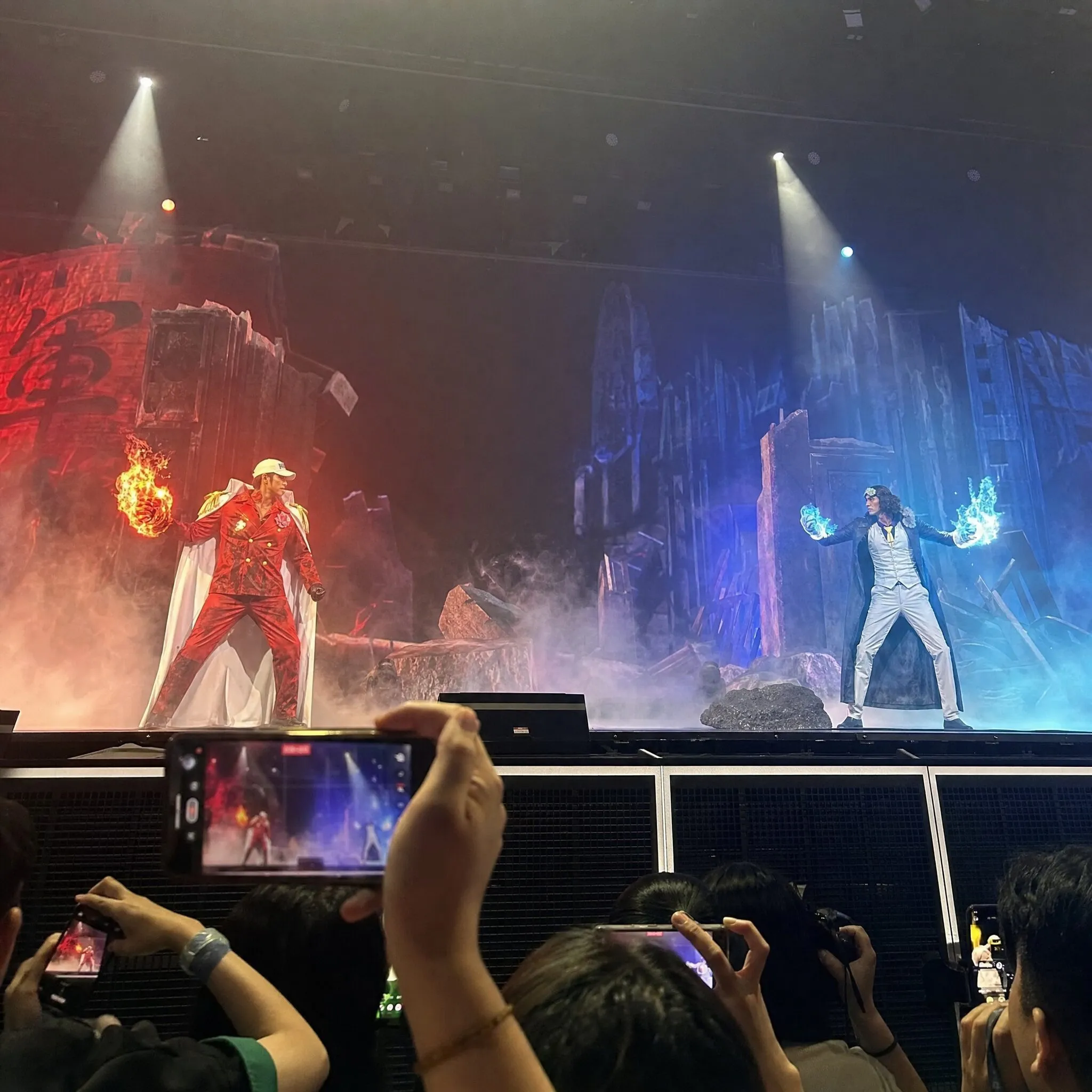
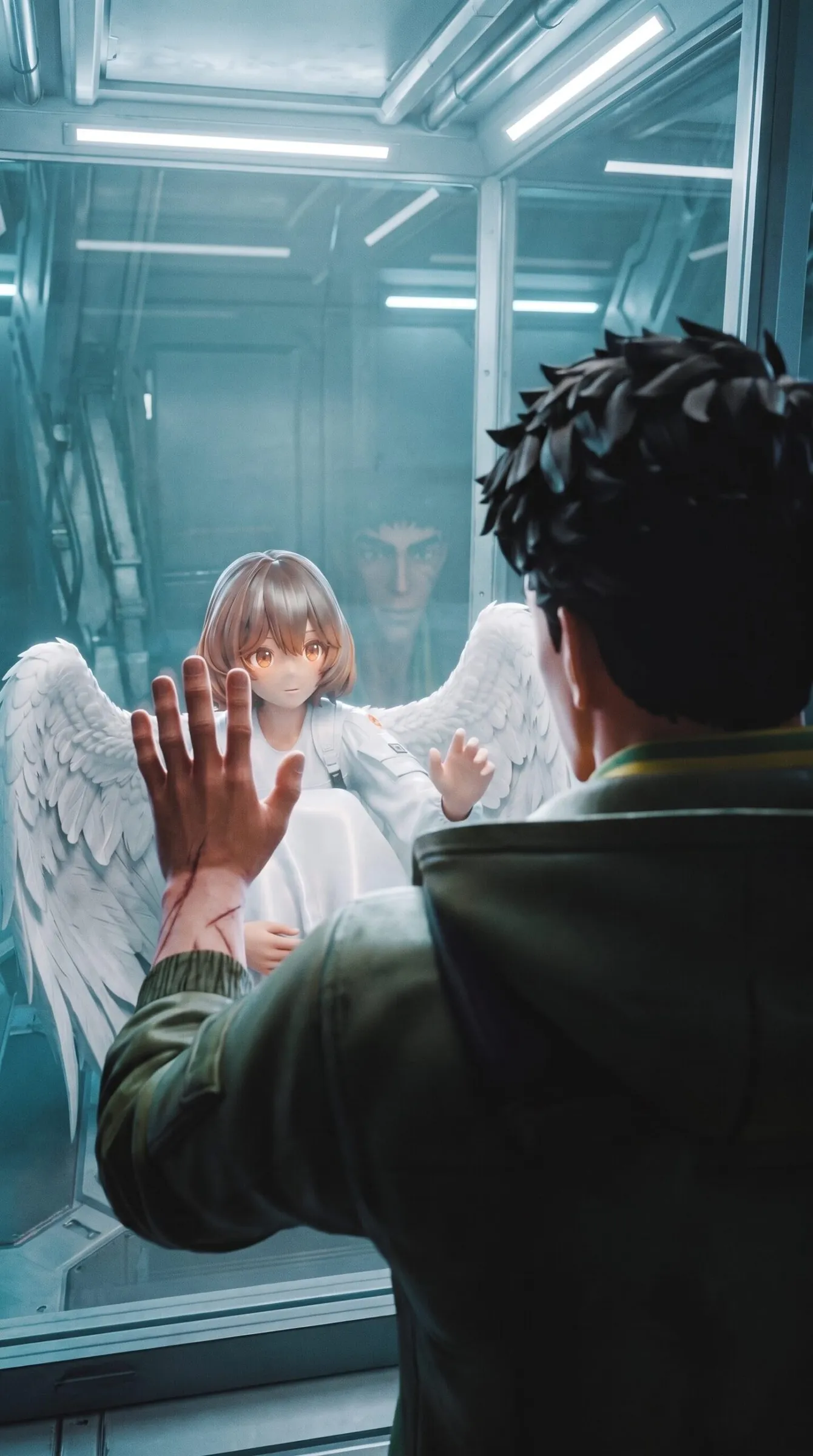
New미야자키 하야오 감독의〈On Your Mark〉를 AI로 다시 만들었습니다 — 제작 과정과 프롬프트 전부 공개
UGC·숏폼Higgsfield · 시댄스 2.5
Prompt19,614자
Create a 30-second first-person POV video: On a rainy night, behind the counter of a small sushi restaurant in Japan with only six seats, the sushi chef's hands first complete the pre-work ritual—washing hands, wiping the knife, and checking the blade—before cutting the fish and shaping three pieces of yellowtail (amberjack) nigiri sushi, finally handing the wooden counter to the customer. Every frame of the entire video is from the same person's first-person perspective. Constructed with a controlled multi-camera sequence and hard cuts. Hyper-realistic, photorealistic feel, like real documentary footage, absolutely no staged shots, absolutely no humor. Scene Setting: Evening business hours, a small, long-established sushi restaurant: The entire cypress counter is polished to a warm shine, and the fish ingredients are neatly arranged in the glass refrigerator. On the chef's workstation were all the prepared ingredients, each in its proper place: a bowl of vinegared rice kept warm in a wooden bucket (rice stand) covered with a damp cloth; a small bowl of hand-cooked vinegar water (tezu); a small dish of freshly grated wasabi; a small dish of boiled and sliced soy sauce and a soy sauce brush; a small dish of freshly grated yuzu peel; and on the cutting board, a realistic-looking piece of yellowtail—not a geometric cube: the pale pinkish-white fish meat was moist, undulating with the muscle fibers, naturally narrowing and thinning at one end, with white fascia lines curving along the side, and rounded, irregular edges—a yanagiba knife lay horizontally on the knife rest; a damp cloth; and a white towel hung inside the counter. Directly in front of the workstation, next to the cutting board, lay an empty cypress wood sushi counter (geta), its surface clean and uncluttered, remaining in an easily visible position throughout the entire process. Behind the bar is a small frosted window, rain streaks meandering down its surface. Outside, heavy night rain falls on the awning of the back alley, water dripping in strings from the eaves. The halo of streetlights is blurred by the rain—in every shot facing the window, the rain is always visible, its sound permeating all other sounds. Noren curtains, washi paper pendant lights, unreadable generic wooden menus; no brand, no identifiable IP. POV Absolute Lock. This is the highest priority rule, alongside continuity. Every frame of the entire thirty-second film comes from the same pair of eyes: the bartender himself, standing behind the counter. The camera is his skull, always embedded in the position of his eyes—there is no other camera position. His eyes are about 50 centimeters above and behind his hands, his gaze angled downwards at approximately 40 degrees towards the workbench—therefore the image always possesses a deep, oblique perspective: the lower part of the frame shows his own hands and the nearby countertop, while the upper part always retains the world in front—the outer edge of the bar, the dim light from the refrigerator, the shadows of the opposite seats, the rain on the frosted window. There are absolutely no 90-degree overhead shots, no "cooking tutorial" camera angles hovering directly above the food, and no flat compositions—if the frame only shows the countertop and hands without any foreground depth, then the camera angle is wrong. The forearms always extend from the bottom edge of the frame and into the depth of the frame, with realistic perspective shortening. A sharp cut only changes the time, never the viewpoint: after each sharp cut, the frame remains in the line of sight of those eyes, just jumping to the next moment. The entire film contains absolutely no third-person shots, no shots of the chef from the side or opposite, no over-the-shoulder shots, and no shots showing the chef's figure—the chef's face and body never appear in a single frame, not even in the reflections of the knife blade, the refrigerator glass, or the bar counter's paint. After each sharp cut, the hands must be in action within the frame; there are no empty shots without hands. The hands of a middle-aged craftsman: well-defined knuckles, clean and firm, a thin callus on the second joint of the right index finger, very short nails, and the cuffs of his navy blue work clothes rolled up to the middle of his forearm. Every detail remains perfectly consistent between each cut. Camera movement is always generated by his body—bending over, turning, looking up; the camera never moves independently of the body. The footage allows and requires all the imperfections of authentic first-person video: slight shakiness, tilt, overshoot, imperfect composition. Operational visibility lock: The pinching motion must be designed for the camera: hands raised to the lower right of chest level, about 40 cm from eyes—hands raised towards the line of sight, not eyes hovering directly above the hands; even at this close range, the depth of the bar counter is still visible at the top edge of the frame. The back of the hand never completely obscures the sushi being formed—the workpiece is always within a visible gap between the hands. After each squeeze, the fingers must open for a moment, allowing the forming rice tray or whole piece of sushi to be fully exposed on the fingers, facing the line of sight; at every crucial moment of swishing, flipping, and shaping, the sushi itself is clearly visible in the frame. The movement from the palm to the wooden counter is a complete and visible arc: the palm opens, the sushi lies on the fingers, it's placed on the counter, and gently set down—the moment of contact is clearly visible, never obscured by the back of the hand. Continuity Lock: Only items clearly placed in the previous shot are present on the cutting board, wooden counter, and rice table; nothing more, nothing less. The number of sushi on the wooden counter is a strictly increasing counter: 0 pieces → 1 piece → 2 pieces → 3 pieces. Each increment must be a clearly visible placement action within the frame—no sushi will ever appear on the counter without being placed on camera. At the start of each shot, the state of everything (including the exact number on the counter) must be completely consistent with the end of the previous shot. Every action occurs only once in the entire film—washing hands once, checking the knife once, cutting each piece of fish only once, pinching each piece only once—never repeated. Each slice of yellowtail is removed, and the cut is retained until the end of the film. No ingredient ever appears or disappears on its own. The geometry of the fish slices is "passported" and locked throughout the process: the thickness, length, width, and shape of each of the three slices are permanently fixed the moment they are cut in beat 2—each slice is about three millimeters thin, one and a half fingers wide, palm-length, thin and soft, with edges slightly translucent under light. Any subsequent slice appearing in any beat must be exactly the same as the three slices cut at the time: the same thinness, the same size, the same fascia texture. The slice placed on the rice tray during shaping is never thicker, smaller, or more regular than the slice cut at the time—it is the same thin slice on the cutting board. Format Mode: Controlled multi-shot sequence, real-time speed, using only hard cuts. A hard cut is a jump in time, not a change in camera position—the same pair of eyes are looking before and after the cut. Each segment begins with action in progress, the hands already in the frame—no empty frames, no fixed shots, no dissolves. The opening ceremony is a slow start; the shaping is the core segment; the handing over the wooden table concludes the entire film. Action Rhythm 1 – Opening Ceremony: A continuous, uninterrupted shot shows him looking down at his hands. The upper edge of the frame still shows the depth of the bar counter: his hands are submerged in a small sink inside the bar, cold water rinsing the backs of his hands, scrubbing between his fingers – the sound of water mingling with the sound of rain. He turns off the water and dries his fingers with a white towel. His right hand picks up the Yanagiba knife from the knife rest, holding it horizontally and steadily – blade facing outwards, back (thick spine) facing him, maintaining this orientation throughout. His left hand folds a damp cloth in half, gently clamping the blade's surface from top to bottom – the cloth only touches the two sides of the knife, never crossing the blade – smoothly gliding it along the blade from the base to the tip; his wrist rotates the knife 180 degrees (the rotation is clearly visible, the blade remains straight), wiping it again from the base to the tip. After wiping, his right hand slowly rotates the knife half a circle between his fingers, the blade angled towards the bar light – a flash of cold light passing through the edge. The knife is placed back on the cutting board, blade facing outwards. At this point, there are 0 pieces on the wooden table. Hard Cut, Beat 2 – Same pair of eyes, never change camera angles: This section is most easily filmed as a side close-up or an overhead instructional shot, both of which are prohibited – throughout the fish-cutting process, he maintains a downward angled gaze from his standing position, with his forearms extending from the bottom corners of the frame and reaching deeper into the distance. His gaze goes beyond the back of his hands to the knife and fish, and the knife is presented in a natural oblique perspective from his own point of view. The upper edge of the frame retains the depth of the bar counter and the dim light from the freezer; there are absolutely no shots of the knife blade viewed from the side at eye level, and absolutely no shots of it hanging vertically above the cutting board. At the beginning, there are whole pieces of yellowtail on the cutting board, and 0 pieces on the wooden table. With the left fingertips gently pressing along the curve of the fish, the right hand holds the yanagi-blade knife and makes a long, angled cut—slicing off the first thin slice: approximately three millimeters thick, one and a half fingers wide, and palm-length. The pale pinkish-white flesh is so thin that the edges are slightly translucent under the light. The cut surface is moist, with clear muscle and white fascia lines, and the edges undulate slightly with the knife's movement. The blade is laid down, and the second and third slices are made using the exact same technique—all three slices are equally thin. The three thin slices of sashimi lie side by side on the cutting board, softly undulating against the surface, leaving three cuts on each piece. The knife is lightly wiped on a damp cloth and placed back. Hard Slice Beat 3—The same pair of eyes, hands raised to the lower right of the chest in the work area, meeting the line of sight; the upper edge of the image still shows the depth of the restaurant. The first piece is shaped, a continuous, uninterrupted shot: the right hand dips two fingers in vinegar water, spreads the palm, picks up a small ball of vinegared rice from the rice tray, and gently squeezes it twice between the fingers—the fingers then open, revealing the formed rice sheet lying on them; the left hand picks up the first piece of fish from the cutting board—the same thin slice just cut: about three millimeters thin, the same size, soft and drooping like silk when picked up, with slightly translucent edges—the right fingertip dips in wasabi and rubs the back of the fish slice (the rubbing motion is visible), the thin fish slice covers the rice sheet, naturally drooping along the curve of the rice sheet to both sides—the moment of covering is clearly visible in the gap between the hands; the hands come together, press lightly, flip, and press again, each time releasing revealing the sushi itself. After shaping, the palms open, the first piece lies on the closed fingers, placed above the wooden tray, and gently set down—the moment of placement is clearly visible. There is now one piece on the wooden tray. Hard cut. Beat 4—the same pair of eyes. At the start, there's exactly one sushi on the wooden table, with two thin slices remaining on the cutting board—about three millimeters thin and the same size as when it was first cut. The second sushi is pinched with the same visible rhythm, the movements faster and more relaxed—fingers still open to reveal the sushi between each grasp; it's placed completely and visibly on the wooden table, alongside the first. Now there are two sushi on the table. Next comes the third: rice, shaping, wasabi, fish smeared, set—placed on the wooden table. Now there are three sushi on the table, side by side, similar in size but not exactly the same. Hard cut. Beat 5—the same pair of eyes. At the start, there are exactly three sushi on the wooden table, exactly the same as at the end of the previous beat. The right hand holds a brush dipped in soy sauce from a small dish, brushing a thin, glossy layer of sauce onto each sushi; the fingertip picks up a small pinch of freshly grated yuzu peel from the small dish and dabs it on the middle sushi, the pale yellow bits falling onto the sauced surface. A white towel wipes away any water stains from the edge of the wooden table. POV straightens up, looks up, and exhales, his gaze sweeping across the frosted window—rain streaks slowly creeping in the halo of the streetlight. Hard cut. Beat 6—The same pair of eyes. At the beginning, the three pieces on the wooden table are intact as before. He lifts the wooden table with both hands, raises it over the bar, and places it steadily on the outer edge of the table—the hands of the customer opposite him reach in from the top edge of the frame in a gesture of greeting. The customer's blurry figure is outside the shallow depth of field, always just the person opposite him in front of his eyes, never cutting into the customer's perspective. He says, his voice is off-screen, but it is his own voice: "Douzo." POV nods slightly, his gaze returning to the cutting board—a piece of fish with three cuts, a willow-blade knife lying still; rain streaks still flowing on the frosted window. The scene ends: the knife and fish under the bar light, the rain on the window. Optics and Camera: The entire film uses a single "lens": his eyes, positioned about 50 centimeters above and behind his hands, gazing downwards at approximately a 40-degree angle—a perpetually oblique perspective, always conveying forward depth, with no vertical overhead shots or instructional video camera angles. A fixed 47° diagonal field of view is presented within a relatively wide tempo, tightening during the fish-cutting and shaping stages due to the forward lean—the changes in framing only come from the body's genuine forward lean and bending, never from zooming or changing camera positions. The head posture during the shaping segments naturally serves visibility: chin slightly tucked, gaze passing over fingertips onto the workpiece—precisely the true working gaze of a craftsman. The unconscious swaying of the standing body, the slow shifting of weight between the feet, the subtle rise and fall with each breath; the long pull of the knife and the moment of each shaping almost freeze the image, leaving only a slight tremor of breath, followed by a relaxed, gentle sway. Every shift in gaze is a genuine head turn: a quick start, a slight overshoot followed by correction, and stabilization with aftershock. The composition is imperfect: the cutting board is not always centered, and the horizon is slightly tilted when looking up. No gimbal for smooth movement, no electronic stabilization, no uniform camera movement, no fisheye lens, no lens changes, no zoom. Autofocus breathes naturally and recovers quickly across the blade, the fish's cross-section, the sushi on the finger, the wooden counter, and the rain-soaked window. Physics: Hyper-realistic physics, with the realism of the fish meat as the highest priority: Yellowtail is soft biological tissue, not a geometric shape—the pale pinkish-white surface undulates with the muscle texture, the white fascia curves, the edges are rounded and irregular; when the knife passes over it, the tissue separates along the grain, slightly sinks and springs back, the cut surface is moist and reflective. The Yanagiba knife is a single piece of rigid steel—highest priority: the blade is absolutely straight, never bent, never broken, never deformed in any frame of the film; the outline from the base to the tip is always a continuous line. When wiping the knife, the cloth, not the knife, bears the force: the cloth slides along the plane of the knife and deforms slightly, while the knife itself remains completely still, like wiping a fixed steel rail. The knife exists in only two states: held in the hand, or laid flat on a knife rest/cutting board (blade facing outwards)—never suspended in mid-air, never piercing fabric or fingers. A three-millimeter-thin slice of fish, when picked up, droops softly like silk, its edges slightly translucent; when placed on a rice tray, it drapes gracefully along the sides, its thickness remaining constant from cut to consumption—never right angles, never machine-cut flatness, never artificially thickening. The vinegared rice, when pressed between the fingers, shows visible firmness, each grain distinct and not mushy; wasabi leaves a pale green mark on the fish's back; soy sauce brushes across the fish's surface, giving it a subtle sheen; yuzu peel crumbs have a realistic, minute weight settling on the fish; when placed on the wooden counter, the bottom of the sushi sinks slightly against the wood. The tendons in both hands are visible, reflecting the true strength of the knife grip and finger positioning. Nothing floats, deforms, replicates, or penetrates the mold. Lighting and Realism Locked In Practical Lighting: Two warm yellow spotlights above the bar illuminate the work area, while the cool white light from the freezer outlines its shape from the side. The cool, dark blue light filtering through the frosted windows and the diffused glow of streetlights provide a constant contrast, and the soft light from the washi paper pendant lamps illuminates the far end of the bar. Exposure prioritizes the hands, knife, fish, and sushi on the fingers, but maintains a documentary feel: natural highlights, warm diffused reflections from the wooden countertop, and no filter effect. Not a Food Advertisement: no oversaturation, no perfect symmetry, no CGI-like smooth surfaces; the three pieces are similar but not identical in shape, and the rice grains are naturally arranged. Stable real-time 24fps, each frame independent and continuous; no slow motion, no speed changes, no stuttering, no ghosting, and no time trailing. Audio: Naturally synchronized sound only: The sound of rain outside the window and dripping water along the awning runs throughout, the sound of water flowing in the sink and closing, the rubbing of towels and cloths, the subtle sound of wiping a knife with a damp cloth, the almost silent, moist sound of a long, sweeping knife cutting fish, the slight sticky sound of vinegared rice being squeezed, the extremely light wooden sound of sushi falling onto the wooden counter, the moist brushing sound of soy sauce, whispers and the light clinking of cups in the distance inside the shop, a customer's low "Itadakimasu" off-screen, and the chef's only line "Douzo"—no narration, no other dialogue, no music, no subtitles, no logo, no watermark.
Added 2026.08.24
Prompt
Create a 30-second first-person POV video: On a rainy night, behind the counter of a small sushi restaurant in Japan with only six seats, the sushi chef's hands first complete the pre-work ritual—washing hands, wiping the knife, and checking the blade—before cutting the fish and shaping three pieces of yellowtail (amberjack) nigiri sushi, finally handing the wooden counter to the customer. Every frame of the entire video is from the same person's first-person perspective. Constructed with a controlled multi-camera sequence and hard cuts. Hyper-realistic, photorealistic feel, like real documentary footage, absolutely no staged shots, absolutely no humor. Scene Setting: Evening business hours, a small, long-established sushi restaurant: The entire cypress counter is polished to a warm shine, and the fish ingredients are neatly arranged in the glass refrigerator. On the chef's workstation were all the prepared ingredients, each in its proper place: a bowl of vinegared rice kept warm in a wooden bucket (rice stand) covered with a damp cloth; a small bowl of hand-cooked vinegar water (tezu); a small dish of freshly grated wasabi; a small dish of boiled and sliced soy sauce and a soy sauce brush; a small dish of freshly grated yuzu peel; and on the cutting board, a realistic-looking piece of yellowtail—not a geometric cube: the pale pinkish-white fish meat was moist, undulating with the muscle fibers, naturally narrowing and thinning at one end, with white fascia lines curving along the side, and rounded, irregular edges—a yanagiba knife lay horizontally on the knife rest; a damp cloth; and a white towel hung inside the counter. Directly in front of the workstation, next to the cutting board, lay an empty cypress wood sushi counter (geta), its surface clean and uncluttered, remaining in an easily visible position throughout the entire process. Behind the bar is a small frosted window, rain streaks meandering down its surface. Outside, heavy night rain falls on the awning of the back alley, water dripping in strings from the eaves. The halo of streetlights is blurred by the rain—in every shot facing the window, the rain is always visible, its sound permeating all other sounds. Noren curtains, washi paper pendant lights, unreadable generic wooden menus; no brand, no identifiable IP. POV Absolute Lock. This is the highest priority rule, alongside continuity. Every frame of the entire thirty-second film comes from the same pair of eyes: the bartender himself, standing behind the counter. The camera is his skull, always embedded in the position of his eyes—there is no other camera position. His eyes are about 50 centimeters above and behind his hands, his gaze angled downwards at approximately 40 degrees towards the workbench—therefore the image always possesses a deep, oblique perspective: the lower part of the frame shows his own hands and the nearby countertop, while the upper part always retains the world in front—the outer edge of the bar, the dim light from the refrigerator, the shadows of the opposite seats, the rain on the frosted window. There are absolutely no 90-degree overhead shots, no "cooking tutorial" camera angles hovering directly above the food, and no flat compositions—if the frame only shows the countertop and hands without any foreground depth, then the camera angle is wrong. The forearms always extend from the bottom edge of the frame and into the depth of the frame, with realistic perspective shortening. A sharp cut only changes the time, never the viewpoint: after each sharp cut, the frame remains in the line of sight of those eyes, just jumping to the next moment. The entire film contains absolutely no third-person shots, no shots of the chef from the side or opposite, no over-the-shoulder shots, and no shots showing the chef's figure—the chef's face and body never appear in a single frame, not even in the reflections of the knife blade, the refrigerator glass, or the bar counter's paint. After each sharp cut, the hands must be in action within the frame; there are no empty shots without hands. The hands of a middle-aged craftsman: well-defined knuckles, clean and firm, a thin callus on the second joint of the right index finger, very short nails, and the cuffs of his navy blue work clothes rolled up to the middle of his forearm. Every detail remains perfectly consistent between each cut. Camera movement is always generated by his body—bending over, turning, looking up; the camera never moves independently of the body. The footage allows and requires all the imperfections of authentic first-person video: slight shakiness, tilt, overshoot, imperfect composition. Operational visibility lock: The pinching motion must be designed for the camera: hands raised to the lower right of chest level, about 40 cm from eyes—hands raised towards the line of sight, not eyes hovering directly above the hands; even at this close range, the depth of the bar counter is still visible at the top edge of the frame. The back of the hand never completely obscures the sushi being formed—the workpiece is always within a visible gap between the hands. After each squeeze, the fingers must open for a moment, allowing the forming rice tray or whole piece of sushi to be fully exposed on the fingers, facing the line of sight; at every crucial moment of swishing, flipping, and shaping, the sushi itself is clearly visible in the frame. The movement from the palm to the wooden counter is a complete and visible arc: the palm opens, the sushi lies on the fingers, it's placed on the counter, and gently set down—the moment of contact is clearly visible, never obscured by the back of the hand. Continuity Lock: Only items clearly placed in the previous shot are present on the cutting board, wooden counter, and rice table; nothing more, nothing less. The number of sushi on the wooden counter is a strictly increasing counter: 0 pieces → 1 piece → 2 pieces → 3 pieces. Each increment must be a clearly visible placement action within the frame—no sushi will ever appear on the counter without being placed on camera. At the start of each shot, the state of everything (including the exact number on the counter) must be completely consistent with the end of the previous shot. Every action occurs only once in the entire film—washing hands once, checking the knife once, cutting each piece of fish only once, pinching each piece only once—never repeated. Each slice of yellowtail is removed, and the cut is retained until the end of the film. No ingredient ever appears or disappears on its own. The geometry of the fish slices is "passported" and locked throughout the process: the thickness, length, width, and shape of each of the three slices are permanently fixed the moment they are cut in beat 2—each slice is about three millimeters thin, one and a half fingers wide, palm-length, thin and soft, with edges slightly translucent under light. Any subsequent slice appearing in any beat must be exactly the same as the three slices cut at the time: the same thinness, the same size, the same fascia texture. The slice placed on the rice tray during shaping is never thicker, smaller, or more regular than the slice cut at the time—it is the same thin slice on the cutting board. Format Mode: Controlled multi-shot sequence, real-time speed, using only hard cuts. A hard cut is a jump in time, not a change in camera position—the same pair of eyes are looking before and after the cut. Each segment begins with action in progress, the hands already in the frame—no empty frames, no fixed shots, no dissolves. The opening ceremony is a slow start; the shaping is the core segment; the handing over the wooden table concludes the entire film. Action Rhythm 1 – Opening Ceremony: A continuous, uninterrupted shot shows him looking down at his hands. The upper edge of the frame still shows the depth of the bar counter: his hands are submerged in a small sink inside the bar, cold water rinsing the backs of his hands, scrubbing between his fingers – the sound of water mingling with the sound of rain. He turns off the water and dries his fingers with a white towel. His right hand picks up the Yanagiba knife from the knife rest, holding it horizontally and steadily – blade facing outwards, back (thick spine) facing him, maintaining this orientation throughout. His left hand folds a damp cloth in half, gently clamping the blade's surface from top to bottom – the cloth only touches the two sides of the knife, never crossing the blade – smoothly gliding it along the blade from the base to the tip; his wrist rotates the knife 180 degrees (the rotation is clearly visible, the blade remains straight), wiping it again from the base to the tip. After wiping, his right hand slowly rotates the knife half a circle between his fingers, the blade angled towards the bar light – a flash of cold light passing through the edge. The knife is placed back on the cutting board, blade facing outwards. At this point, there are 0 pieces on the wooden table. Hard Cut, Beat 2 – Same pair of eyes, never change camera angles: This section is most easily filmed as a side close-up or an overhead instructional shot, both of which are prohibited – throughout the fish-cutting process, he maintains a downward angled gaze from his standing position, with his forearms extending from the bottom corners of the frame and reaching deeper into the distance. His gaze goes beyond the back of his hands to the knife and fish, and the knife is presented in a natural oblique perspective from his own point of view. The upper edge of the frame retains the depth of the bar counter and the dim light from the freezer; there are absolutely no shots of the knife blade viewed from the side at eye level, and absolutely no shots of it hanging vertically above the cutting board. At the beginning, there are whole pieces of yellowtail on the cutting board, and 0 pieces on the wooden table. With the left fingertips gently pressing along the curve of the fish, the right hand holds the yanagi-blade knife and makes a long, angled cut—slicing off the first thin slice: approximately three millimeters thick, one and a half fingers wide, and palm-length. The pale pinkish-white flesh is so thin that the edges are slightly translucent under the light. The cut surface is moist, with clear muscle and white fascia lines, and the edges undulate slightly with the knife's movement. The blade is laid down, and the second and third slices are made using the exact same technique—all three slices are equally thin. The three thin slices of sashimi lie side by side on the cutting board, softly undulating against the surface, leaving three cuts on each piece. The knife is lightly wiped on a damp cloth and placed back. Hard Slice Beat 3—The same pair of eyes, hands raised to the lower right of the chest in the work area, meeting the line of sight; the upper edge of the image still shows the depth of the restaurant. The first piece is shaped, a continuous, uninterrupted shot: the right hand dips two fingers in vinegar water, spreads the palm, picks up a small ball of vinegared rice from the rice tray, and gently squeezes it twice between the fingers—the fingers then open, revealing the formed rice sheet lying on them; the left hand picks up the first piece of fish from the cutting board—the same thin slice just cut: about three millimeters thin, the same size, soft and drooping like silk when picked up, with slightly translucent edges—the right fingertip dips in wasabi and rubs the back of the fish slice (the rubbing motion is visible), the thin fish slice covers the rice sheet, naturally drooping along the curve of the rice sheet to both sides—the moment of covering is clearly visible in the gap between the hands; the hands come together, press lightly, flip, and press again, each time releasing revealing the sushi itself. After shaping, the palms open, the first piece lies on the closed fingers, placed above the wooden tray, and gently set down—the moment of placement is clearly visible. There is now one piece on the wooden tray. Hard cut. Beat 4—the same pair of eyes. At the start, there's exactly one sushi on the wooden table, with two thin slices remaining on the cutting board—about three millimeters thin and the same size as when it was first cut. The second sushi is pinched with the same visible rhythm, the movements faster and more relaxed—fingers still open to reveal the sushi between each grasp; it's placed completely and visibly on the wooden table, alongside the first. Now there are two sushi on the table. Next comes the third: rice, shaping, wasabi, fish smeared, set—placed on the wooden table. Now there are three sushi on the table, side by side, similar in size but not exactly the same. Hard cut. Beat 5—the same pair of eyes. At the start, there are exactly three sushi on the wooden table, exactly the same as at the end of the previous beat. The right hand holds a brush dipped in soy sauce from a small dish, brushing a thin, glossy layer of sauce onto each sushi; the fingertip picks up a small pinch of freshly grated yuzu peel from the small dish and dabs it on the middle sushi, the pale yellow bits falling onto the sauced surface. A white towel wipes away any water stains from the edge of the wooden table. POV straightens up, looks up, and exhales, his gaze sweeping across the frosted window—rain streaks slowly creeping in the halo of the streetlight. Hard cut. Beat 6—The same pair of eyes. At the beginning, the three pieces on the wooden table are intact as before. He lifts the wooden table with both hands, raises it over the bar, and places it steadily on the outer edge of the table—the hands of the customer opposite him reach in from the top edge of the frame in a gesture of greeting. The customer's blurry figure is outside the shallow depth of field, always just the person opposite him in front of his eyes, never cutting into the customer's perspective. He says, his voice is off-screen, but it is his own voice: "Douzo." POV nods slightly, his gaze returning to the cutting board—a piece of fish with three cuts, a willow-blade knife lying still; rain streaks still flowing on the frosted window. The scene ends: the knife and fish under the bar light, the rain on the window. Optics and Camera: The entire film uses a single "lens": his eyes, positioned about 50 centimeters above and behind his hands, gazing downwards at approximately a 40-degree angle—a perpetually oblique perspective, always conveying forward depth, with no vertical overhead shots or instructional video camera angles. A fixed 47° diagonal field of view is presented within a relatively wide tempo, tightening during the fish-cutting and shaping stages due to the forward lean—the changes in framing only come from the body's genuine forward lean and bending, never from zooming or changing camera positions. The head posture during the shaping segments naturally serves visibility: chin slightly tucked, gaze passing over fingertips onto the workpiece—precisely the true working gaze of a craftsman. The unconscious swaying of the standing body, the slow shifting of weight between the feet, the subtle rise and fall with each breath; the long pull of the knife and the moment of each shaping almost freeze the image, leaving only a slight tremor of breath, followed by a relaxed, gentle sway. Every shift in gaze is a genuine head turn: a quick start, a slight overshoot followed by correction, and stabilization with aftershock. The composition is imperfect: the cutting board is not always centered, and the horizon is slightly tilted when looking up. No gimbal for smooth movement, no electronic stabilization, no uniform camera movement, no fisheye lens, no lens changes, no zoom. Autofocus breathes naturally and recovers quickly across the blade, the fish's cross-section, the sushi on the finger, the wooden counter, and the rain-soaked window. Physics: Hyper-realistic physics, with the realism of the fish meat as the highest priority: Yellowtail is soft biological tissue, not a geometric shape—the pale pinkish-white surface undulates with the muscle texture, the white fascia curves, the edges are rounded and irregular; when the knife passes over it, the tissue separates along the grain, slightly sinks and springs back, the cut surface is moist and reflective. The Yanagiba knife is a single piece of rigid steel—highest priority: the blade is absolutely straight, never bent, never broken, never deformed in any frame of the film; the outline from the base to the tip is always a continuous line. When wiping the knife, the cloth, not the knife, bears the force: the cloth slides along the plane of the knife and deforms slightly, while the knife itself remains completely still, like wiping a fixed steel rail. The knife exists in only two states: held in the hand, or laid flat on a knife rest/cutting board (blade facing outwards)—never suspended in mid-air, never piercing fabric or fingers. A three-millimeter-thin slice of fish, when picked up, droops softly like silk, its edges slightly translucent; when placed on a rice tray, it drapes gracefully along the sides, its thickness remaining constant from cut to consumption—never right angles, never machine-cut flatness, never artificially thickening. The vinegared rice, when pressed between the fingers, shows visible firmness, each grain distinct and not mushy; wasabi leaves a pale green mark on the fish's back; soy sauce brushes across the fish's surface, giving it a subtle sheen; yuzu peel crumbs have a realistic, minute weight settling on the fish; when placed on the wooden counter, the bottom of the sushi sinks slightly against the wood. The tendons in both hands are visible, reflecting the true strength of the knife grip and finger positioning. Nothing floats, deforms, replicates, or penetrates the mold. Lighting and Realism Locked In Practical Lighting: Two warm yellow spotlights above the bar illuminate the work area, while the cool white light from the freezer outlines its shape from the side. The cool, dark blue light filtering through the frosted windows and the diffused glow of streetlights provide a constant contrast, and the soft light from the washi paper pendant lamps illuminates the far end of the bar. Exposure prioritizes the hands, knife, fish, and sushi on the fingers, but maintains a documentary feel: natural highlights, warm diffused reflections from the wooden countertop, and no filter effect. Not a Food Advertisement: no oversaturation, no perfect symmetry, no CGI-like smooth surfaces; the three pieces are similar but not identical in shape, and the rice grains are naturally arranged. Stable real-time 24fps, each frame independent and continuous; no slow motion, no speed changes, no stuttering, no ghosting, and no time trailing. Audio: Naturally synchronized sound only: The sound of rain outside the window and dripping water along the awning runs throughout, the sound of water flowing in the sink and closing, the rubbing of towels and cloths, the subtle sound of wiping a knife with a damp cloth, the almost silent, moist sound of a long, sweeping knife cutting fish, the slight sticky sound of vinegared rice being squeezed, the extremely light wooden sound of sushi falling onto the wooden counter, the moist brushing sound of soy sauce, whispers and the light clinking of cups in the distance inside the shop, a customer's low "Itadakimasu" off-screen, and the chef's only line "Douzo"—no narration, no other dialogue, no music, no subtitles, no logo, no watermark.

구글 계정으로 3초, 따로 작성할 양식은 없습니다.
처음이시면 이 버튼으로 가입까지 함께 진행됩니다.