 New
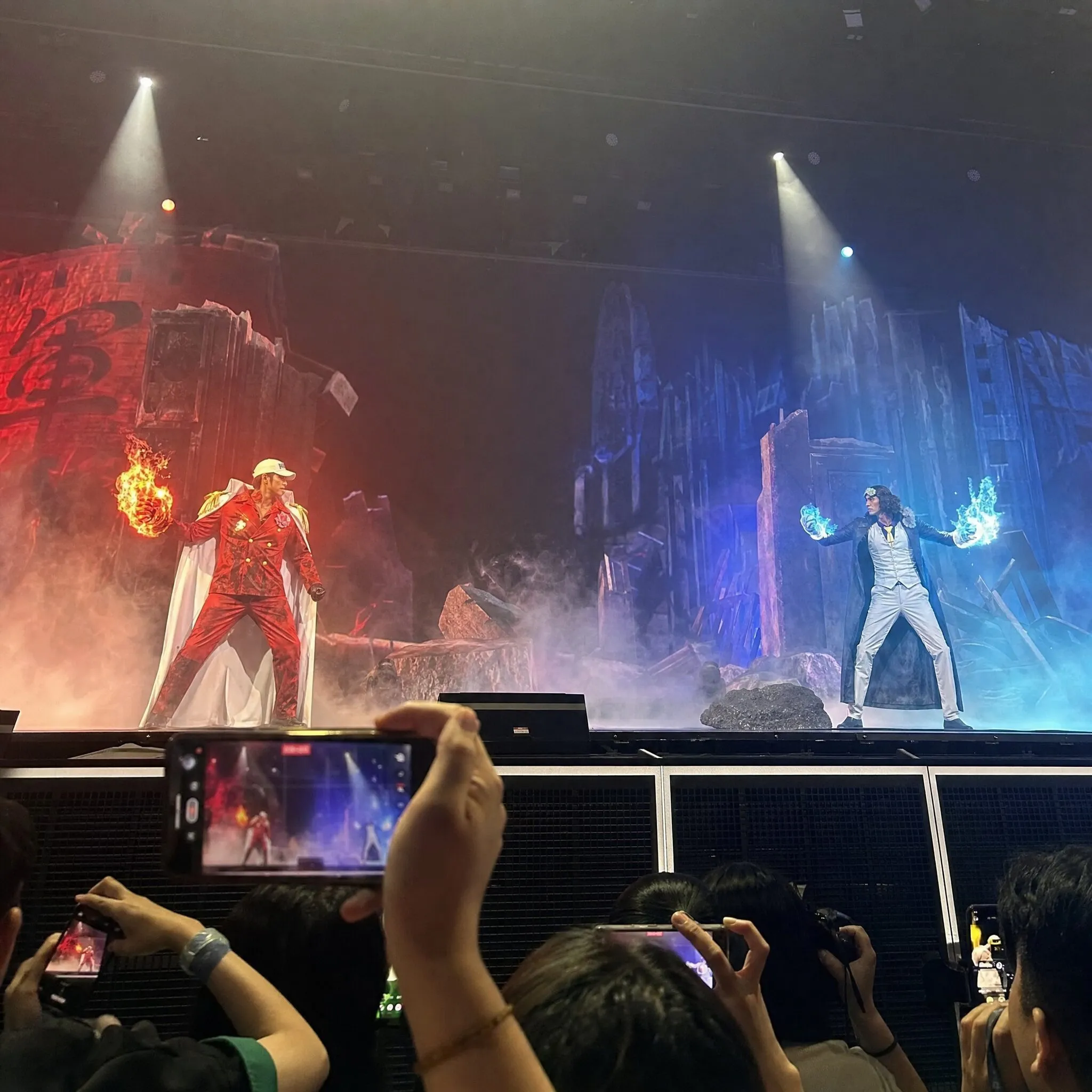
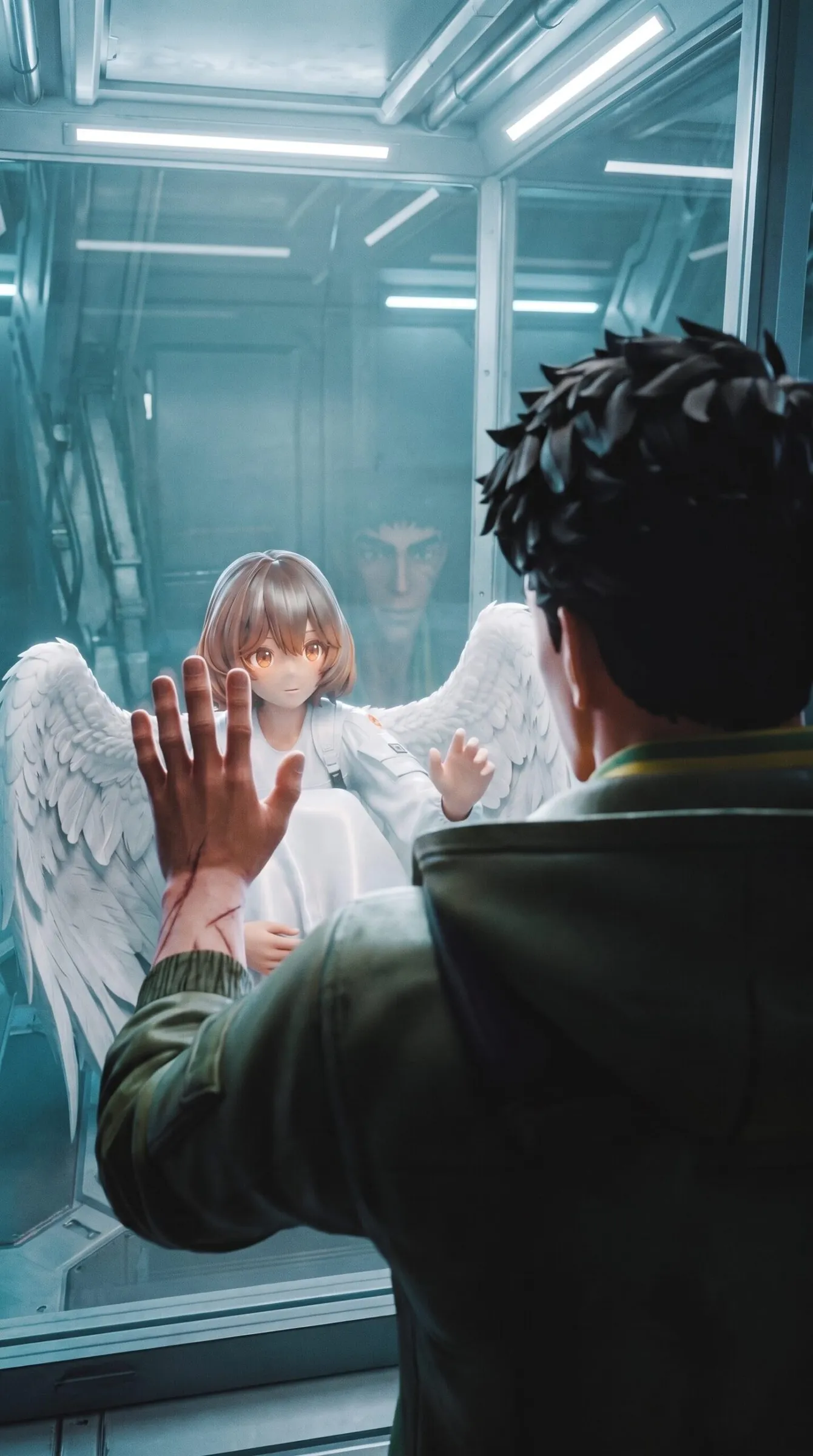
New미야자키 하야오 감독의〈On Your Mark〉를 AI로 다시 만들었습니다 — 제작 과정과 프롬프트 전부 공개
UGC·숏폼Higgsfield · 시댄스 2.5
Prompt15,133자
Create a 30-second first-person POV video: Early morning in an old-fashioned family farm in the European countryside—the farmer's own first-person perspective, showing him completing his daily tasks: picking up a log from the ground, splitting it on the woodpile, splitting another piece, carrying half a log to the wood box by the wall, filling a bucket with water from the creaking hand pump and drinking from it with his palm, pouring the water into the calf's water trough—the calf's mouth agape, and finally leaning against the fence to survey the yard, the farm dog sitting beside him. Every frame of the entire video is from the same person's first-person perspective. Constructed with a controlled multi-shot sequence and hard cuts. Hyper-realistic, photorealistic feel, like real documentary footage, absolutely no staged shots, absolutely no humor. Scene Setting: A dry farmyard shortly after sunrise: cool, low-angle golden sunlight, long shadows, and a thin morning mist floating over the fields. A battered wood-splitting block stands on compacted dirt, wood chips and bark scattered around it; several unsplit logs lie loosely on the ground around the block. Beside the shed wall stands an open woodbox, weathered by the elements, half-filled with chopped firewood. Not far away is an old-fashioned cast-iron hand pump, its long, curved handle resting on a stone slab, an empty galvanized iron bucket hanging from the pump's hook. Along the fence, in the calf pen, a low wooden watering trough stands—three calves are already waiting by the railing. An old splitting axe leans against the wood-splitting block: the handle is polished to a shine, the blade clean. A bushy farm dog trots along the edge of the yard. In the distance: farmhouses, fences, and green fields stretch to the horizon. No brand, no identifiable IP address, no readable text. POV Absolutely Locked. This is the highest priority rule, alongside continuity. Every frame of the entire thirty seconds comes from the same pair of eyes: the farmer himself. The camera is his skull, always positioned where his eyes are—there is no other camera position. His eyes are above and behind his hands, his gaze angled downwards at approximately 40 degrees towards the object he is working on—thus the image always possesses a deep, oblique perspective: the lower part of the frame shows his hands and the ground nearby, while the upper part always retains the world in front—the yard, the fence, the field. There are never any vertical 90-degree overhead shots, never any suspended "tutorial" camera positions, never flat compositions, never shots of him swinging an axe from the side—if the depth of the foreground is not visible in the frame, then the camera position is incorrect. His forearms always extend from the bottom edge of the frame and into the depths, with realistic perspective shortening. Hard cuts only change time, never the viewpoint: after each hard cut, the image remains the same pair of eyes looking out, just jumping to the next moment. There are absolutely no third-person shots throughout the film—the farmer's face and body never appear in any frame, not even in the reflections on the buckets and the water tank. After each hard cut, his hands must be in action within the frame; there are no empty shots without hands. The middle-aged farmer's hands: broad and rough, with large knuckles and short, blunt nails; the cuffs of his faded plaid shirt rolled up to his elbows; an old steel watch with a worn dial on his left wrist. Every detail remains perfectly consistent between each cut. Camera movement is always generated by his body—bending, swinging the axe, walking, pumping, leaning; the camera never moves independently of the body. The footage allows and requires all the imperfections of authentic first-person video: slight shakiness, tilt, overshoot, imperfect composition. The axe is a rigid, single piece of steel and wood—the highest priority: the handle and the axe head are absolutely straight and solid in every frame of the film, never bending, never breaking, never deforming; from the end of the handle to the blade, its outline remains a continuous, unchanging shape. When swung, the axe moves as a single mass, with real inertia. The axe has only two states: held by his hands, or leaning against his clearly positioned location—never suspended in mid-air, never replicated. Continuity Locking: Only things clearly seen or moved in previous shots exist in the yard. At the start of each shot, everything—the remaining logs on the ground, the half-pieces of firewood next to the chopping block, the loading level of the wood crate, the water level in the bucket, the water level in the trough—must be exactly the same as at the end of the previous shot. Every action occurs only once in the entire film—each log is chopped only once and never reappears in its complete form; the wood crate is loaded only once; the bucket is filled only once and emptied only once; no action is ever repeated. The chopped halves are issued "passports" and locked throughout: each chop produces exactly two halves—never three, never pieces of unknown proportion—each half is roughly equal in size, the same length as the log, and has a semi-circular cross-section (half the circular cross-section of the log). The shape and size of each half are permanently fixed the moment the axe blade cleaves it: from chopping to landing to packing, the size, proportion, and cross-section never change. The visibility rules for the half-pieces: The moment of splitting and the entire process of landing must occur within the same uninterrupted shot. From the frame where the axe blade separates them until they are completely still, the two halves remain continuously in the frame—neither half-piece is allowed to leave the frame mid-flight, be obscured by a hand or axe, or reappear. The eye follows the two halves until they are settled. Because of this, the halves do not bounce far: they are simply split and fall to either side, landing on the muddy ground next to the chopping block—no more than half a step away—always in the center of the field of view. The water in the bucket rises only through the visible pump action within the frame, each surge corresponding to the rhythm of the handle; the water leaves only once—visibly poured into the trough, causing the water level in the trough to rise accordingly. No object ever appears or disappears on its own. Format Mode: Controlled multi-shot sequence, real-time speed, using only hard cuts. A hard cut is a jump in time, not a change in camera position. Each segment begins with action in progress—no empty frames, no stationary shots, no dissolves. The axe opens the film; the water pump forms the mid-section of the rhythm; the fence and the dog conclude the film. Action Beats Beat 1 – A continuous, uninterrupted shot: hands reach towards the ground – the frame sinks with the body realistically bending down – picking up a log from the mud, brushing off a woodlice from the bark. He stands the log on the chopping block, turns it halfway to adjust it, grips the axe – swings the axe through the top edge of the frame, the entire frame rising with his body – then chops: *crack!* The log splits in the middle, exactly two equal halves – each half of the log, with a crescent-shaped cross-section – they don't fly or bounce, but simply slowly fall to either side, sliding from the block onto the muddy ground next to it, each lightly tapping before settling down. The two halves remain in the frame from the splitting to their settling, the eye following them to the ground: lying on the ground are the two halves that were just separated on the block, the same size, the same cross-section. Hard Cut Beat 2 – The same pair of eyes. Two halves lay where they had fallen; the log on the ground was now missing a section. He bent down—the camera panned—picked up the second section, the knotted log, stood it upright, and chopped it: the axe got stuck halfway, the wood groaned; he lifted the axe and the log together and smashed it down again—the log tore along the knot, the fibers snapped, the cut rough—still exactly two roughly equal halves, falling to either side next to the woodpile, visible throughout, their size unchanged after landing, the viewer following them as they settled. A forceful exhale. The axe leaned back against the woodpile in the shot. Hard cut, beat 3—the same pair of eyes. Four halves lay beside the woodpile—the same four halves produced in the previous two beats. He gathered them two at a time into his left arm—the camera panned with each bend—walked to the wall, and visibly loaded them one by one into the woodpile, each load in the frame, the woodpile's capacity increasing by exactly four halves. He brushed the bark chips from his palm with a light tap. Hard Cut, Beat 4 – The same pair of eyes, standing beside the water pump. An empty bucket rests under the pump nozzle. Right hand grips the long handle and begins to pump – creak-crack, creak-crack – water gushes out in bursts, each pump sending a stream of water into the bucket, the water level rising with each gust, perfectly matching the rhythm of the handle. When the bucket is nearly full, he cups his left palm under the pump nozzle, catching the last gust, drinking from his palm – the cool water is at the bottom of the frame, two realistic swallows, water droplets dripping from his wrist. Hard Cut, Beat 5 – The same pair of eyes. He carries a full bucket – the handle in his hand, the frame slightly tilted towards the weight, the water swaying – towards the calf pen. Three calves are huddled by the pen, pushing and shoving each other. He tilts the bucket towards the trough: a smooth, heavy stream of water pours in, the water level visibly rises, and before the water is even finished, the calves' mouths are already shoving in – gulping, ears flapping, one calf using its shoulder to push another aside. As he righted the empty bucket, the smallest calf turned from the water's edge and began licking his wet hand—its large, rough tongue scraping his knuckles. A soft chuckle escaped the frame, but it was his own; his hand rubbed the calf's forehead. Hard cut, beat 6—the same pair of eyes, a continuous, uninterrupted shot. The empty bucket hung on his fist. He walked to the fence, placed the bucket at his feet, and rested his forearms on the top bar—the scene settled with the leaning, the breathing slowed. The yard unfolded before him in the low, slanting golden light: the woodpile and sawdust, the full wood bin, the water pump, the drinking calf, the morning mist rising from the fields. Soft footsteps—a fluffy dog came, sat down to his right, gently rested on his lap, and looked into the same yard. The farmer's hand landed on the dog's head and remained there. The scene ended: the morning yard, the water trough, the dog under his hand. Optics and Camera: The entire film uses a single "lens": his eyes—always a slanted perspective, always conveying forward depth, never a vertical overhead shot, never a tutorial video camera angle. A fixed 47° diagonal field of view; changes in framing only come from the body—bending over to pick up wood, the rise and fall of the axe, walking, pressing the pump, leaning against the crossbar—never from zoom, never from changing camera positions. Every swing of the axe carries the image: a realistic ascent, a rapid and heavy descent, a crisp tremor at the moment of impact, a slow recovery; after the chop, the gaze doesn't shift—it stays on the block, following the two halves as they fall and settle. Each pump press shakes the image at its own rhythm. Every shift in gaze is a realistic head turn: a rapid start, a slight overshoot, a correction, stabilization with aftershock—never a smooth, uniform pan. The composition is imperfect: the wood-splitting block isn't always centered, the horizon tilts when turning. There's no smooth tripod, no electronic stabilization, no uniform camera movement, no fisheye lens, no lens changes, no zoom. The autofocus breathes naturally and recovers quickly amidst the axe blade, wood grain, water rope, calf's mouth, and yard. Physics: Hyper-realistic physics. Wood splits along the grain: straight-grained logs split cleanly with a crisp snap, knotted logs resist first, then tear apart fiber by fiber; each strike is physically conserved—a log becomes exactly two equal halves, the total volume remains unchanged, each half retains the shape and size at the moment of splitting, never changing proportions, never shattering into more pieces (only small wood chips are allowed to fly). The halves don't bounce far: after splitting, they separate along the cross-section, tilting to either side, sliding with realistic weight onto the mud beside the mound, at most tapping lightly before coming to a stop—the entire trajectory is short, slow, and fully visible. The axe carries realistic mass; the vibrations of the impact are transmitted into the frame through the hands. Pumping water obeys the lever: it's a gushing flow, not a uniform flow; the water level in the bucket rises gradually; the poured water is a continuous liquid; the rise in the trough corresponds to the amount poured in. The calf is a heavy young animal—the pushing, the hooves stomping in the mud, the tongue scraping the back of your hand—all feel realistically dragged. The dog's sitting posture conveys a realistic weight against your legs. The tendons in your hands are visible, showing genuine effort. No objects float, distort, duplicate, or clip through. Visual Lock-In: Hyper-realistic Digital Cinematic Quality: Clean, modern sensor footage, natural colors, honest morning light ratios—the low, golden light is due to the rising sun, not filters. No VHS, no stylized color grading, no cyan-orange cast, no oversaturation. Not an advertisement: no perfect composition, no CGI-smooth surfaces; the woodpile is scarred, the water pump's paint is peeling, the sink's edges are gnawed, the yard is realistically messy. Stable real-time 24fps, each frame independent and continuous; no slow motion, no speed changes, no stuttering, no ghosting, no time trailing. Audio: Only natural, synchronized sounds: birdsong and the distant crowing of a rooster lie beneath everything; the hollow thud of a log being placed on a block, the whooshing sound of an axe, the crisp cracking and splitting of knotted wood, the soft thud of half a piece of firewood falling to the ground beside the block; the clanging of firewood being thrown into the woodpile; the creaking-crackling rhythm of the water pump and the gurgling of water, two realistic swallows in the palm of the hand; the creaking of the handle, the heavy splashing of water being poured into the trough, the calf gulping and pushing, the rough sound of its tongue scraping against its skin; the dog's footsteps by the fence and a satisfied sigh; the farmer's only human voice—the forceful exhale when swinging the axe and the soft snort of laughter towards the calf. No narration, no dialogue, no music, no subtitles, no logo, no watermark.
Added 2026.08.24
Prompt
Create a 30-second first-person POV video: Early morning in an old-fashioned family farm in the European countryside—the farmer's own first-person perspective, showing him completing his daily tasks: picking up a log from the ground, splitting it on the woodpile, splitting another piece, carrying half a log to the wood box by the wall, filling a bucket with water from the creaking hand pump and drinking from it with his palm, pouring the water into the calf's water trough—the calf's mouth agape, and finally leaning against the fence to survey the yard, the farm dog sitting beside him. Every frame of the entire video is from the same person's first-person perspective. Constructed with a controlled multi-shot sequence and hard cuts. Hyper-realistic, photorealistic feel, like real documentary footage, absolutely no staged shots, absolutely no humor. Scene Setting: A dry farmyard shortly after sunrise: cool, low-angle golden sunlight, long shadows, and a thin morning mist floating over the fields. A battered wood-splitting block stands on compacted dirt, wood chips and bark scattered around it; several unsplit logs lie loosely on the ground around the block. Beside the shed wall stands an open woodbox, weathered by the elements, half-filled with chopped firewood. Not far away is an old-fashioned cast-iron hand pump, its long, curved handle resting on a stone slab, an empty galvanized iron bucket hanging from the pump's hook. Along the fence, in the calf pen, a low wooden watering trough stands—three calves are already waiting by the railing. An old splitting axe leans against the wood-splitting block: the handle is polished to a shine, the blade clean. A bushy farm dog trots along the edge of the yard. In the distance: farmhouses, fences, and green fields stretch to the horizon. No brand, no identifiable IP address, no readable text. POV Absolutely Locked. This is the highest priority rule, alongside continuity. Every frame of the entire thirty seconds comes from the same pair of eyes: the farmer himself. The camera is his skull, always positioned where his eyes are—there is no other camera position. His eyes are above and behind his hands, his gaze angled downwards at approximately 40 degrees towards the object he is working on—thus the image always possesses a deep, oblique perspective: the lower part of the frame shows his hands and the ground nearby, while the upper part always retains the world in front—the yard, the fence, the field. There are never any vertical 90-degree overhead shots, never any suspended "tutorial" camera positions, never flat compositions, never shots of him swinging an axe from the side—if the depth of the foreground is not visible in the frame, then the camera position is incorrect. His forearms always extend from the bottom edge of the frame and into the depths, with realistic perspective shortening. Hard cuts only change time, never the viewpoint: after each hard cut, the image remains the same pair of eyes looking out, just jumping to the next moment. There are absolutely no third-person shots throughout the film—the farmer's face and body never appear in any frame, not even in the reflections on the buckets and the water tank. After each hard cut, his hands must be in action within the frame; there are no empty shots without hands. The middle-aged farmer's hands: broad and rough, with large knuckles and short, blunt nails; the cuffs of his faded plaid shirt rolled up to his elbows; an old steel watch with a worn dial on his left wrist. Every detail remains perfectly consistent between each cut. Camera movement is always generated by his body—bending, swinging the axe, walking, pumping, leaning; the camera never moves independently of the body. The footage allows and requires all the imperfections of authentic first-person video: slight shakiness, tilt, overshoot, imperfect composition. The axe is a rigid, single piece of steel and wood—the highest priority: the handle and the axe head are absolutely straight and solid in every frame of the film, never bending, never breaking, never deforming; from the end of the handle to the blade, its outline remains a continuous, unchanging shape. When swung, the axe moves as a single mass, with real inertia. The axe has only two states: held by his hands, or leaning against his clearly positioned location—never suspended in mid-air, never replicated. Continuity Locking: Only things clearly seen or moved in previous shots exist in the yard. At the start of each shot, everything—the remaining logs on the ground, the half-pieces of firewood next to the chopping block, the loading level of the wood crate, the water level in the bucket, the water level in the trough—must be exactly the same as at the end of the previous shot. Every action occurs only once in the entire film—each log is chopped only once and never reappears in its complete form; the wood crate is loaded only once; the bucket is filled only once and emptied only once; no action is ever repeated. The chopped halves are issued "passports" and locked throughout: each chop produces exactly two halves—never three, never pieces of unknown proportion—each half is roughly equal in size, the same length as the log, and has a semi-circular cross-section (half the circular cross-section of the log). The shape and size of each half are permanently fixed the moment the axe blade cleaves it: from chopping to landing to packing, the size, proportion, and cross-section never change. The visibility rules for the half-pieces: The moment of splitting and the entire process of landing must occur within the same uninterrupted shot. From the frame where the axe blade separates them until they are completely still, the two halves remain continuously in the frame—neither half-piece is allowed to leave the frame mid-flight, be obscured by a hand or axe, or reappear. The eye follows the two halves until they are settled. Because of this, the halves do not bounce far: they are simply split and fall to either side, landing on the muddy ground next to the chopping block—no more than half a step away—always in the center of the field of view. The water in the bucket rises only through the visible pump action within the frame, each surge corresponding to the rhythm of the handle; the water leaves only once—visibly poured into the trough, causing the water level in the trough to rise accordingly. No object ever appears or disappears on its own. Format Mode: Controlled multi-shot sequence, real-time speed, using only hard cuts. A hard cut is a jump in time, not a change in camera position. Each segment begins with action in progress—no empty frames, no stationary shots, no dissolves. The axe opens the film; the water pump forms the mid-section of the rhythm; the fence and the dog conclude the film. Action Beats Beat 1 – A continuous, uninterrupted shot: hands reach towards the ground – the frame sinks with the body realistically bending down – picking up a log from the mud, brushing off a woodlice from the bark. He stands the log on the chopping block, turns it halfway to adjust it, grips the axe – swings the axe through the top edge of the frame, the entire frame rising with his body – then chops: *crack!* The log splits in the middle, exactly two equal halves – each half of the log, with a crescent-shaped cross-section – they don't fly or bounce, but simply slowly fall to either side, sliding from the block onto the muddy ground next to it, each lightly tapping before settling down. The two halves remain in the frame from the splitting to their settling, the eye following them to the ground: lying on the ground are the two halves that were just separated on the block, the same size, the same cross-section. Hard Cut Beat 2 – The same pair of eyes. Two halves lay where they had fallen; the log on the ground was now missing a section. He bent down—the camera panned—picked up the second section, the knotted log, stood it upright, and chopped it: the axe got stuck halfway, the wood groaned; he lifted the axe and the log together and smashed it down again—the log tore along the knot, the fibers snapped, the cut rough—still exactly two roughly equal halves, falling to either side next to the woodpile, visible throughout, their size unchanged after landing, the viewer following them as they settled. A forceful exhale. The axe leaned back against the woodpile in the shot. Hard cut, beat 3—the same pair of eyes. Four halves lay beside the woodpile—the same four halves produced in the previous two beats. He gathered them two at a time into his left arm—the camera panned with each bend—walked to the wall, and visibly loaded them one by one into the woodpile, each load in the frame, the woodpile's capacity increasing by exactly four halves. He brushed the bark chips from his palm with a light tap. Hard Cut, Beat 4 – The same pair of eyes, standing beside the water pump. An empty bucket rests under the pump nozzle. Right hand grips the long handle and begins to pump – creak-crack, creak-crack – water gushes out in bursts, each pump sending a stream of water into the bucket, the water level rising with each gust, perfectly matching the rhythm of the handle. When the bucket is nearly full, he cups his left palm under the pump nozzle, catching the last gust, drinking from his palm – the cool water is at the bottom of the frame, two realistic swallows, water droplets dripping from his wrist. Hard Cut, Beat 5 – The same pair of eyes. He carries a full bucket – the handle in his hand, the frame slightly tilted towards the weight, the water swaying – towards the calf pen. Three calves are huddled by the pen, pushing and shoving each other. He tilts the bucket towards the trough: a smooth, heavy stream of water pours in, the water level visibly rises, and before the water is even finished, the calves' mouths are already shoving in – gulping, ears flapping, one calf using its shoulder to push another aside. As he righted the empty bucket, the smallest calf turned from the water's edge and began licking his wet hand—its large, rough tongue scraping his knuckles. A soft chuckle escaped the frame, but it was his own; his hand rubbed the calf's forehead. Hard cut, beat 6—the same pair of eyes, a continuous, uninterrupted shot. The empty bucket hung on his fist. He walked to the fence, placed the bucket at his feet, and rested his forearms on the top bar—the scene settled with the leaning, the breathing slowed. The yard unfolded before him in the low, slanting golden light: the woodpile and sawdust, the full wood bin, the water pump, the drinking calf, the morning mist rising from the fields. Soft footsteps—a fluffy dog came, sat down to his right, gently rested on his lap, and looked into the same yard. The farmer's hand landed on the dog's head and remained there. The scene ended: the morning yard, the water trough, the dog under his hand. Optics and Camera: The entire film uses a single "lens": his eyes—always a slanted perspective, always conveying forward depth, never a vertical overhead shot, never a tutorial video camera angle. A fixed 47° diagonal field of view; changes in framing only come from the body—bending over to pick up wood, the rise and fall of the axe, walking, pressing the pump, leaning against the crossbar—never from zoom, never from changing camera positions. Every swing of the axe carries the image: a realistic ascent, a rapid and heavy descent, a crisp tremor at the moment of impact, a slow recovery; after the chop, the gaze doesn't shift—it stays on the block, following the two halves as they fall and settle. Each pump press shakes the image at its own rhythm. Every shift in gaze is a realistic head turn: a rapid start, a slight overshoot, a correction, stabilization with aftershock—never a smooth, uniform pan. The composition is imperfect: the wood-splitting block isn't always centered, the horizon tilts when turning. There's no smooth tripod, no electronic stabilization, no uniform camera movement, no fisheye lens, no lens changes, no zoom. The autofocus breathes naturally and recovers quickly amidst the axe blade, wood grain, water rope, calf's mouth, and yard. Physics: Hyper-realistic physics. Wood splits along the grain: straight-grained logs split cleanly with a crisp snap, knotted logs resist first, then tear apart fiber by fiber; each strike is physically conserved—a log becomes exactly two equal halves, the total volume remains unchanged, each half retains the shape and size at the moment of splitting, never changing proportions, never shattering into more pieces (only small wood chips are allowed to fly). The halves don't bounce far: after splitting, they separate along the cross-section, tilting to either side, sliding with realistic weight onto the mud beside the mound, at most tapping lightly before coming to a stop—the entire trajectory is short, slow, and fully visible. The axe carries realistic mass; the vibrations of the impact are transmitted into the frame through the hands. Pumping water obeys the lever: it's a gushing flow, not a uniform flow; the water level in the bucket rises gradually; the poured water is a continuous liquid; the rise in the trough corresponds to the amount poured in. The calf is a heavy young animal—the pushing, the hooves stomping in the mud, the tongue scraping the back of your hand—all feel realistically dragged. The dog's sitting posture conveys a realistic weight against your legs. The tendons in your hands are visible, showing genuine effort. No objects float, distort, duplicate, or clip through. Visual Lock-In: Hyper-realistic Digital Cinematic Quality: Clean, modern sensor footage, natural colors, honest morning light ratios—the low, golden light is due to the rising sun, not filters. No VHS, no stylized color grading, no cyan-orange cast, no oversaturation. Not an advertisement: no perfect composition, no CGI-smooth surfaces; the woodpile is scarred, the water pump's paint is peeling, the sink's edges are gnawed, the yard is realistically messy. Stable real-time 24fps, each frame independent and continuous; no slow motion, no speed changes, no stuttering, no ghosting, no time trailing. Audio: Only natural, synchronized sounds: birdsong and the distant crowing of a rooster lie beneath everything; the hollow thud of a log being placed on a block, the whooshing sound of an axe, the crisp cracking and splitting of knotted wood, the soft thud of half a piece of firewood falling to the ground beside the block; the clanging of firewood being thrown into the woodpile; the creaking-crackling rhythm of the water pump and the gurgling of water, two realistic swallows in the palm of the hand; the creaking of the handle, the heavy splashing of water being poured into the trough, the calf gulping and pushing, the rough sound of its tongue scraping against its skin; the dog's footsteps by the fence and a satisfied sigh; the farmer's only human voice—the forceful exhale when swinging the axe and the soft snort of laughter towards the calf. No narration, no dialogue, no music, no subtitles, no logo, no watermark.

구글 계정으로 3초, 따로 작성할 양식은 없습니다.
처음이시면 이 버튼으로 가입까지 함께 진행됩니다.