 New
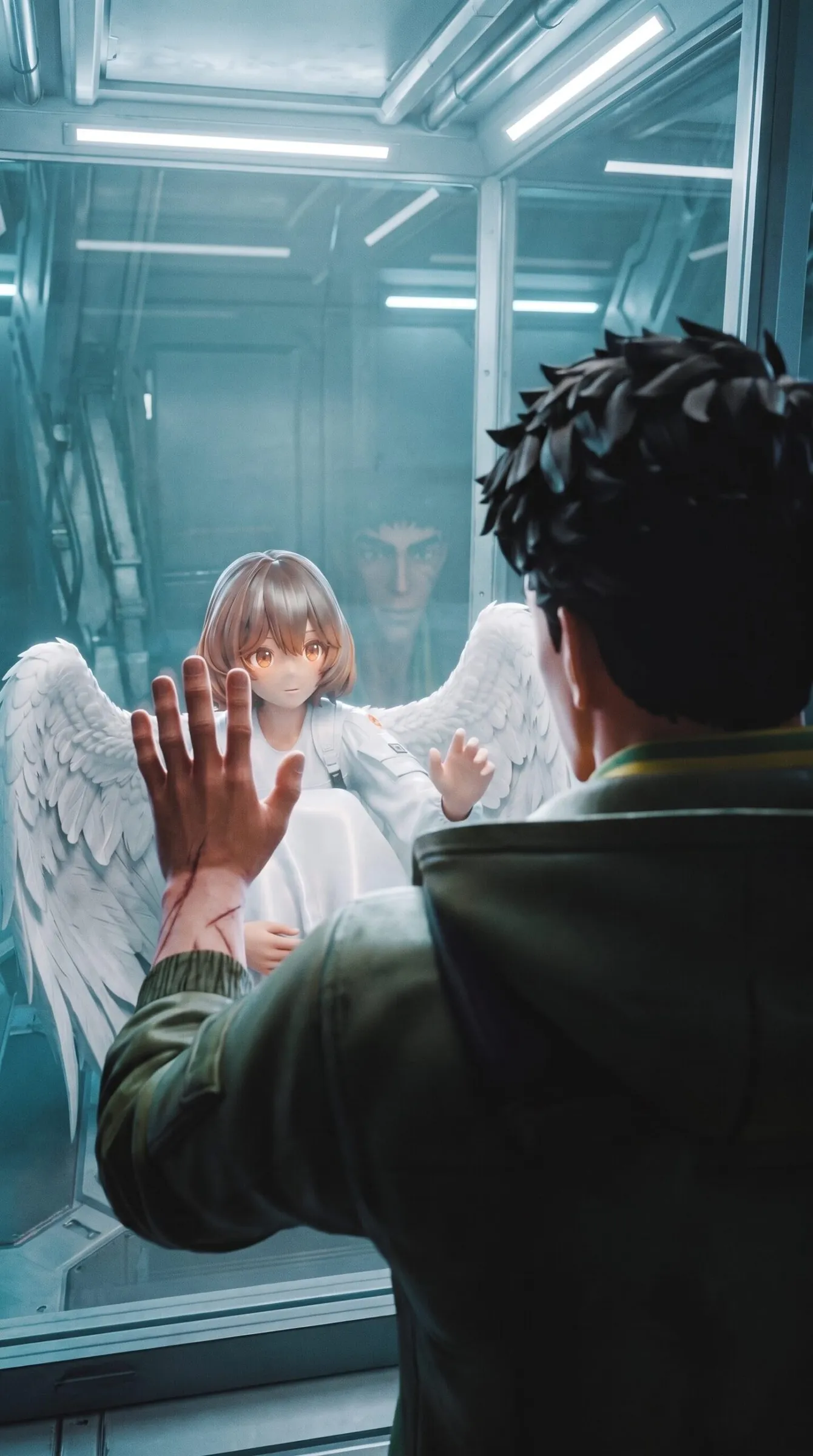
New미야자키 하야오 감독의〈On Your Mark〉를 AI로 다시 만들었습니다 — 제작 과정과 프롬프트 전부 공개
시네마틱 단편Higgsfield · 시댄스 2.5
Prompt9,551자
A single unbroken take, no cuts and no black frames throughout, a cinematic first-person POV long take, cinematic lighting effects, extreme photorealism, anamorphic widescreen 2.39:1, 35mm film texture, professional color grading, sharp focus, highly detailed textures, dense organic film grain, shallow depth of field, realistic physical shake like a helmet-mounted camera—continuous handheld micro-tremors throughout, absolutely no gimbal stabilization and no smooth dolly-like movement, real-time speed throughout with absolutely no slow motion. The entire film is presented through Hercules’ uninterrupted first-person subjective perspective: his own scarred arms remain visible along the bottom edge of the frame at all times—his left hand holds a heavy round bronze shield, and his right hand grips a bronze short sword. @hydra is an ancient bronze automaton multi-headed serpent monster, with its overall form and silhouette following the reference image. Every part of it is made of metal: a lumbering, slow-moving quadrupedal lizard-like torso built from layers of overlapping, sliding bronze and brass armor plates, with oil-blackened steel gears, pistons, hydraulic rods, and tendon-like braided cables exposed through the gaps; the armor plates are covered with verdigris patina and scratches. At the center of its chest, a rotating gear core emits the warm amber glow of a furnace. Four agile, lightning-fast serpent necks are formed from interlocking segments of bronze vertebral rings, with enormous hydraulic jaws full of fangs, dripping scalding black machine oil, and two glowing amber crystalline lenses for eyes. The torso turns heavily and slowly, each step shaking the ground, while the serpent necks strike as fast as whips. All four heads remain in frame throughout the entire film without a single one missing; any heads not fighting the protagonist instead attack other soldiers across the battlefield. More than ten Greek soldiers in bronze armor do not form ranks or cluster together. Each is scattered across the entire marsh, fighting independently and coordinating through horns and shouted calls: an isolated archer on a root-covered mound, a mobile archer shooting while wading through the water, a javelin thrower running as he hurls spears, a two-man rope team on the far flank, two climbers approaching from opposite sides, and a roaming torchbearer providing support. Soldiers are continuously seized in jaws, flung through the air, or sent stumbling into the muddy water. The Lernaean Marsh in bright, clear daylight: a deep blue sky dotted with white clouds, knee-deep water sparkling with silvery light, vivid green reeds, pale gray dead trees, low mist clinging to the water, and daylight passing through the mist to cast moving shafts of light. The sun itself never enters the frame; there is no dusk and no golden-orange color cast. The light is vivid, alive, and constantly moving—shimmering reflections from the water travel across the bronze armor plates, the amber eye lights and chest furnace glow pulse, torch sparks scatter, and rim highlights shift continuously. The image is bright and saturated: vivid green, deep blue, silver-white, bronze-gold, and amber-orange. As the battle progresses, the clear water is churned into white foam mixed with broken reeds, floating shattered shields, and smoking films of black oil, continuing all the way to the end. Every collision has realistic weight, inertia, and reaction force. The camera is Hercules’ head and never becomes still: while running, every footfall produces vertical jolts and micro-tremors; even during brief pauses, the view gently rises, falls, and sways with his heavy breathing. Every impact violently whips the image in the direction of the force with a moment of motion blur, then rapidly stabilizes through muscular exertion. The beast’s roars, emergence from the water, and ground-shaking footsteps become shockwaves and continuous low-frequency vibrations that rattle the image. One continuous 30-second take: the viewpoint sprints at full speed through silvery water, the image bouncing vertically and trembling with every footfall as the shield and sword rise and fall with the run—the battle is already underway. Ahead, a gigantic dark shadow beneath the surface churns up a rolling wake. The isolated archer on the root-covered mound sends arrows one after another in arcing trajectories into the center of the disturbance. A javelin thrower roars past the viewpoint from the right and hurls his spear with all his strength, while horn blasts and shouted calls from soldiers scattered across the battlefield answer one another. The surface erupts violently—@hydra surges out of the water, curtains of water pouring down its bronze armor plates like brilliant white waterfalls. Its four vertebral-ring serpent necks fan outward against the deep blue sky, all four pairs of amber lens-eyes lighting up one after another, while the gear core in its chest glows with furnace light. Arrows already embedded in its armor spark against the plates. The shockwave and spray from its emergence slam into the viewpoint, jolting the image, which continues to shake with residual vibrations. The nearest serpent head charges at full speed and crashes violently into the raised round shield—a thunderous metallic impact travels through the shield and into Hercules’ arm, whipping the image violently in the direction of the strike with a moment of blur. The collision lifts Hercules completely off his feet and throws him backward. He lands flat on his back in the water and is driven beneath the surface into a muffled world: bubbles, suspended mud, wavering daylight, and the distorted gigantic shadow of the monster marked by amber points of light, while the image sways sluggishly with the current. He bursts back through the surface and the soundscape explodes into full volume again: in the distance, one serpent head holds a screaming soldier in its jaws and flings him high into the air, its metal jaws snapping shut in midair with a crunch and crushing the bronze armor. The mobile archer continues firing while retreating, and the weighted rope loop of the two-man team on the far flank has already cinched around one serpent neck as they pull downward together. Another head dives in to bite—Hercules braces its enormous jaws with the rim of his shield and drives the short sword in his right hand straight forward. The blade pierces directly through one glowing amber crystalline lens-eye, spraying sparks and shattered crystal. The reaction force of the thrust jolts the image. The serpent head releases a shrill metallic scraping scream and thrashes violently with the sword still embedded, while Hercules grips the hilt with all his strength and uses the motion to wrench the short sword free. He immediately lowers his body and sprints around the flank to bait the enemy—the lumbering bronze torso roars with grinding gears as it attempts to turn, its four feet plowing through mud and water, pistons hissing and venting steam, but it cannot rotate quickly enough. The four serpent necks are forced into wide sweeping motions: one snaps after the viewpoint while the others sweep toward the scattered soldiers. The two climbers seize the opportunity to scale the dorsal spikes from opposite sides and hammer their long spears deep into the seams between the armor plates, spraying sparks. Hercules catches the opening and slashes horizontally with all his strength at the nearest serpent neck—the sword blade severs the cable bundle between two vertebral rings. The severed head tumbles away through the air, spraying black oil and sparks. Cables lash wildly from the severed neck, then the vertebral rings telescope outward segment by segment as the armor plates click, fold, and lock back into place. A new head self-assembles, and its two amber eyes suddenly ignite—all four heads are restored and remain in frame together. The final encirclement: the archers unleash a coordinated volley to suppress the monster, javelins pass overhead and bury themselves in the seams of its torso, the climbers on its back shout and stab repeatedly, and the torchbearer’s flames force one head away—the four enraged mechanical heads simultaneously close in on the viewpoint, their enormous jaws filling the entire frame and surrounding the center of the shield. At the instant of one final deafening metallic crash as metal fangs strike bronze, the image cuts off abruptly amid the screaming. Audio: Hercules’ heavy breathing and enraged roars continue throughout; horn blasts and shouted responses from soldiers scattered across the battlefield; arrows whistling through the air and striking the metal armor plates with ringing impacts and sparks; roaring gears, hissing pistons venting steam, hydraulic jaws clanging open and shut, and the metallic chain-rattle of swinging vertebral rings; the thunderous metallic crash of a serpent head striking the shield; the crunch of bronze armor being crushed and the soldier’s scream fading into the distance; the explosion of shattered crystal and the metallic scraping scream as the sword pierces the lens-eye; cables snapping in the severed neck, black oil spraying, and the clicking, folding sounds of the new head assembling; full-frequency muffled underwater pressure followed by the soundscape exploding back as Hercules breaks the surface; low-frequency heavy impacts accompanying every collision; the ending cuts off abruptly at the metallic crash. Total: 30 seconds / 1 shot / 2.39:1
Added 2026.08.24
Prompt
A single unbroken take, no cuts and no black frames throughout, a cinematic first-person POV long take, cinematic lighting effects, extreme photorealism, anamorphic widescreen 2.39:1, 35mm film texture, professional color grading, sharp focus, highly detailed textures, dense organic film grain, shallow depth of field, realistic physical shake like a helmet-mounted camera—continuous handheld micro-tremors throughout, absolutely no gimbal stabilization and no smooth dolly-like movement, real-time speed throughout with absolutely no slow motion. The entire film is presented through Hercules’ uninterrupted first-person subjective perspective: his own scarred arms remain visible along the bottom edge of the frame at all times—his left hand holds a heavy round bronze shield, and his right hand grips a bronze short sword. @hydra is an ancient bronze automaton multi-headed serpent monster, with its overall form and silhouette following the reference image. Every part of it is made of metal: a lumbering, slow-moving quadrupedal lizard-like torso built from layers of overlapping, sliding bronze and brass armor plates, with oil-blackened steel gears, pistons, hydraulic rods, and tendon-like braided cables exposed through the gaps; the armor plates are covered with verdigris patina and scratches. At the center of its chest, a rotating gear core emits the warm amber glow of a furnace. Four agile, lightning-fast serpent necks are formed from interlocking segments of bronze vertebral rings, with enormous hydraulic jaws full of fangs, dripping scalding black machine oil, and two glowing amber crystalline lenses for eyes. The torso turns heavily and slowly, each step shaking the ground, while the serpent necks strike as fast as whips. All four heads remain in frame throughout the entire film without a single one missing; any heads not fighting the protagonist instead attack other soldiers across the battlefield. More than ten Greek soldiers in bronze armor do not form ranks or cluster together. Each is scattered across the entire marsh, fighting independently and coordinating through horns and shouted calls: an isolated archer on a root-covered mound, a mobile archer shooting while wading through the water, a javelin thrower running as he hurls spears, a two-man rope team on the far flank, two climbers approaching from opposite sides, and a roaming torchbearer providing support. Soldiers are continuously seized in jaws, flung through the air, or sent stumbling into the muddy water. The Lernaean Marsh in bright, clear daylight: a deep blue sky dotted with white clouds, knee-deep water sparkling with silvery light, vivid green reeds, pale gray dead trees, low mist clinging to the water, and daylight passing through the mist to cast moving shafts of light. The sun itself never enters the frame; there is no dusk and no golden-orange color cast. The light is vivid, alive, and constantly moving—shimmering reflections from the water travel across the bronze armor plates, the amber eye lights and chest furnace glow pulse, torch sparks scatter, and rim highlights shift continuously. The image is bright and saturated: vivid green, deep blue, silver-white, bronze-gold, and amber-orange. As the battle progresses, the clear water is churned into white foam mixed with broken reeds, floating shattered shields, and smoking films of black oil, continuing all the way to the end. Every collision has realistic weight, inertia, and reaction force. The camera is Hercules’ head and never becomes still: while running, every footfall produces vertical jolts and micro-tremors; even during brief pauses, the view gently rises, falls, and sways with his heavy breathing. Every impact violently whips the image in the direction of the force with a moment of motion blur, then rapidly stabilizes through muscular exertion. The beast’s roars, emergence from the water, and ground-shaking footsteps become shockwaves and continuous low-frequency vibrations that rattle the image. One continuous 30-second take: the viewpoint sprints at full speed through silvery water, the image bouncing vertically and trembling with every footfall as the shield and sword rise and fall with the run—the battle is already underway. Ahead, a gigantic dark shadow beneath the surface churns up a rolling wake. The isolated archer on the root-covered mound sends arrows one after another in arcing trajectories into the center of the disturbance. A javelin thrower roars past the viewpoint from the right and hurls his spear with all his strength, while horn blasts and shouted calls from soldiers scattered across the battlefield answer one another. The surface erupts violently—@hydra surges out of the water, curtains of water pouring down its bronze armor plates like brilliant white waterfalls. Its four vertebral-ring serpent necks fan outward against the deep blue sky, all four pairs of amber lens-eyes lighting up one after another, while the gear core in its chest glows with furnace light. Arrows already embedded in its armor spark against the plates. The shockwave and spray from its emergence slam into the viewpoint, jolting the image, which continues to shake with residual vibrations. The nearest serpent head charges at full speed and crashes violently into the raised round shield—a thunderous metallic impact travels through the shield and into Hercules’ arm, whipping the image violently in the direction of the strike with a moment of blur. The collision lifts Hercules completely off his feet and throws him backward. He lands flat on his back in the water and is driven beneath the surface into a muffled world: bubbles, suspended mud, wavering daylight, and the distorted gigantic shadow of the monster marked by amber points of light, while the image sways sluggishly with the current. He bursts back through the surface and the soundscape explodes into full volume again: in the distance, one serpent head holds a screaming soldier in its jaws and flings him high into the air, its metal jaws snapping shut in midair with a crunch and crushing the bronze armor. The mobile archer continues firing while retreating, and the weighted rope loop of the two-man team on the far flank has already cinched around one serpent neck as they pull downward together. Another head dives in to bite—Hercules braces its enormous jaws with the rim of his shield and drives the short sword in his right hand straight forward. The blade pierces directly through one glowing amber crystalline lens-eye, spraying sparks and shattered crystal. The reaction force of the thrust jolts the image. The serpent head releases a shrill metallic scraping scream and thrashes violently with the sword still embedded, while Hercules grips the hilt with all his strength and uses the motion to wrench the short sword free. He immediately lowers his body and sprints around the flank to bait the enemy—the lumbering bronze torso roars with grinding gears as it attempts to turn, its four feet plowing through mud and water, pistons hissing and venting steam, but it cannot rotate quickly enough. The four serpent necks are forced into wide sweeping motions: one snaps after the viewpoint while the others sweep toward the scattered soldiers. The two climbers seize the opportunity to scale the dorsal spikes from opposite sides and hammer their long spears deep into the seams between the armor plates, spraying sparks. Hercules catches the opening and slashes horizontally with all his strength at the nearest serpent neck—the sword blade severs the cable bundle between two vertebral rings. The severed head tumbles away through the air, spraying black oil and sparks. Cables lash wildly from the severed neck, then the vertebral rings telescope outward segment by segment as the armor plates click, fold, and lock back into place. A new head self-assembles, and its two amber eyes suddenly ignite—all four heads are restored and remain in frame together. The final encirclement: the archers unleash a coordinated volley to suppress the monster, javelins pass overhead and bury themselves in the seams of its torso, the climbers on its back shout and stab repeatedly, and the torchbearer’s flames force one head away—the four enraged mechanical heads simultaneously close in on the viewpoint, their enormous jaws filling the entire frame and surrounding the center of the shield. At the instant of one final deafening metallic crash as metal fangs strike bronze, the image cuts off abruptly amid the screaming. Audio: Hercules’ heavy breathing and enraged roars continue throughout; horn blasts and shouted responses from soldiers scattered across the battlefield; arrows whistling through the air and striking the metal armor plates with ringing impacts and sparks; roaring gears, hissing pistons venting steam, hydraulic jaws clanging open and shut, and the metallic chain-rattle of swinging vertebral rings; the thunderous metallic crash of a serpent head striking the shield; the crunch of bronze armor being crushed and the soldier’s scream fading into the distance; the explosion of shattered crystal and the metallic scraping scream as the sword pierces the lens-eye; cables snapping in the severed neck, black oil spraying, and the clicking, folding sounds of the new head assembling; full-frequency muffled underwater pressure followed by the soundscape exploding back as Hercules breaks the surface; low-frequency heavy impacts accompanying every collision; the ending cuts off abruptly at the metallic crash. Total: 30 seconds / 1 shot / 2.39:1

구글 계정으로 3초, 따로 작성할 양식은 없습니다.
처음이시면 이 버튼으로 가입까지 함께 진행됩니다.